Building a StoryBrand: Clarify Your Message So Customers Will Listen
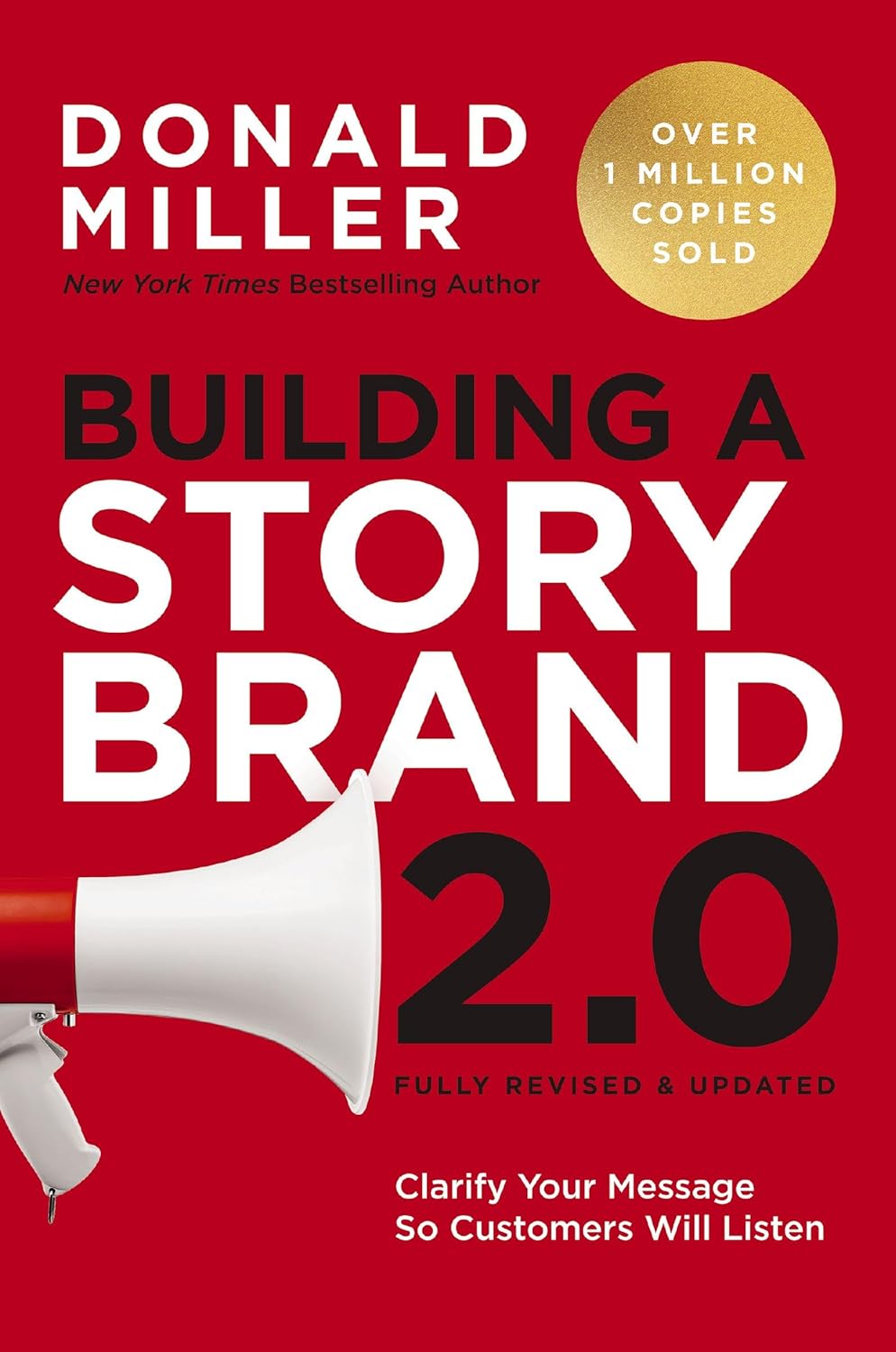
Donald Miller —
Category: Adquisición de Clientes & Marketing
Building a StoryBrand: Clarify Your Message So Customers Will Listen turns marketing into a simple script. The central idea: customers are not interested in your brand; they are interested in solving their problem. If you frame your offering as a story where the customer is the hero and your brand is the guide, people understand faster, remember more, and take action.
What is it about exactly? Miller distills his SB7 framework (seven story elements applied to branding). When used together, they transform your communication into a clear BrandScript that you can then apply to your website, emails, presentations, and sales. The SB7 Framework (Step by Step) A character (your customer) wants something Define a specific desire (not twenty). E.g.: “withdraw their money without friction.” They have a problem Name it in three layers: External: the tangible (long forms, fees). Internal: how they feel (frustration, distrust). Philosophical: why it’s unfair (“withdrawing your own money shouldn’t be difficult”). 3. Meet a guide (you): the guide shows empathy (“we know what hurts”) and authority (proof: cases, credentials, SLAs). 4. The guide gives them a plan Two types: Process (3–4 simple steps: “Sign up → Verify → Withdraw”). Agreement (what you promise: security, timelines, support). 5. Call to action Direct: “Start now”, “Schedule a demo”. Transitional: lead magnet for those who haven’t decided yet (guide, checklist, demo). 6. Help them avoid failure: explain what they lose if they don’t act (time, money, risks). Without exaggerated fear: clear and honest. 7. End in success: Paint the desired future with concrete benefits: time savings, clarity, control, confidence. What you will learn with “Building a StoryBrand” How to focus the message on the customer’s problem (not on your biography). How to create a BrandScript that guides everything: website, pitches, ads, emails. How to write a one-liner that anyone can understand. How to design a homepage that converts (StoryBrand structure). How to create lead magnets and email sequences that educate and close. How to repeat clear and consistent CTAs without being aggressive. One-liner (useful formula) “We help [audience] to [specific result] so they can [aspiration] without [pain].” E.g.: “We help operators verify users in minutes so they can withdraw quickly, without friction or surprises.” StoryBrand Wireframe for Your Website Hero (at the very top): clear headline + subline that names the problem + direct CTA (“Start now”) and transitional CTA (“Download the guide”). Problem section: external/internal/philosophical in bullets. The promise (success): 3–4 measurable benefits. The guide: brief empathy + authority (logos, metrics, testimonials). The plan (3 steps): simple, visual. The cost of not acting: what is avoided if they choose you. Lead magnet: checklist/template. Repeated CTA: same text, same verb. Clear FAQs/T&Cs and footer. Email in StoryBrand Key (mini-playbook) Welcome (1): empathy + 3-step plan + CTA. Value (2–3): useful content that solves micro-problems; transitional CTA. Success case: before/after with metrics; direct CTA. Objections: address common doubts (price, support, security). Clear offer: summary of the plan + legitimate urgency (not artificial) + CTA. How to Apply StoryBrand in iGaming Hero customer: operator, affiliate, or player (choose one per page/campaign). External problem: slow KYC, confusing withdrawals, overwhelmed support, unclear bonuses. Internal problem: “I don’t trust”, “I waste time”. Guide: shows empathy (“we know how frustrating it is…”) + authority (licenses, SLAs, withdrawal metrics, audits). Plan: 3 visible steps (e.g.: Verify → Deposit → Withdraw in 24h). CTA: “Create verified account”, “Request demo”, “Download clear withdrawal checklist”. Avoid failure: “No fine print, no unnecessary waits, no endless tickets.” Success: “You get paid quickly, understand your costs, play with control.” Compliance/responsible gaming: integrate default limits and clear language as part of the promise (your “agreement”). Quick Toolkit: BrandScript (1 page) with the 7 blocks completed. One-liner approved by the entire team (support, sales, product). Homepage checklist with the previous wireframe. Lead magnet: checklist “10 signs of a clear withdrawal” / “Guide to quotas in 5 minutes”. 5-email sequence (welcome, value, case, objections, offer). CTA style guide: one verb, same text throughout the website, consistent color. “Building a StoryBrand” forces you to choose: whose story is it? If you make the customer the hero, you become the guide who simplifies, directs, and resolves. With such a message, everything communicates the same—site, sales, support—and people understand what you offer, why it works, and what to do now. That clarity sells. And, above all, helps.
Related videos
- How to clarify your message so people listen | Donald Miller | TEDx
- "Building a Storybrand" by Donald Miller - Storytelling
- The StoryBrand Framework Explained In 7 Minutes
- Storybrand One Liner Exercise | Donald Miller | EntreLeadership Takeaways
- El poder de las historias | Eduardo Sáenz de Cabezón | TEDx