Customer Loyalty: How to Earn It, How to Keep It
Jill Griffin —
Category: Fidelidad del Cliente & Retención
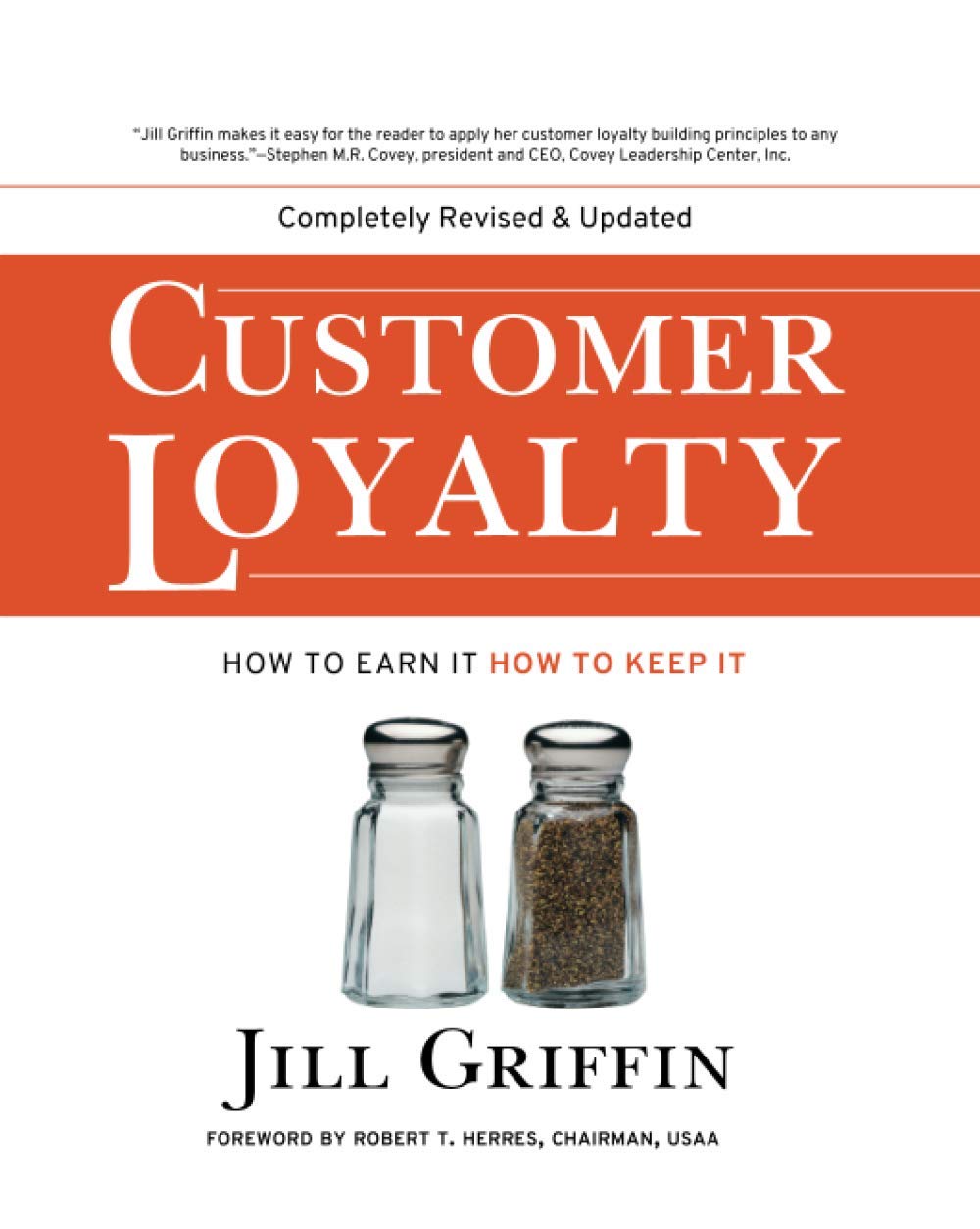
Customer Loyalty: How to Earn It, How to Keep It is a straightforward manual on retaining and growing existing customers. Griffin clarifies what many companies confuse: loyalty is not habit or inertia; it is a value-driven relationship built through consistent experiences, excellent recovery from failures, and benefits that truly matter to the customer. The book organizes tactics, metrics, and internal culture to enhance lifetime value (LTV) and reduce churn.
What is it about exactly? The author connects strategy, operations, and culture to move customers up the "loyalty ladder": Suspicious → Prospect → Occasional Buyer → Repeat Customer → Client (relationship) → Advocate/Referrer Each rung requires clear promises, consistent delivery, and signals of recognition. The book teaches how to measure and manage this progress with practical tools: churn analysis, service recovery, referral and win-back programs, and designing loyalty programs that go beyond just points. Key Ideas (in brief) Retention Economy: selling more to those who already trust you is often more profitable than acquiring new customers from scratch. Key: LTV, share of wallet, and cost to serve. Loyalty Ladder: define target behaviors for each rung (repeat purchases, redemptions, referrals, feature adoption) and design micro-experiences that provoke them. Perceived Value: loyalty = (quality + convenience + relationship + trust) – (price + effort + risk). Work on both sides of the equation. Service Recovery: well-resolved failures strengthen the relationship: speed, fairness, transparency, and closing the loop. Voice of the Customer (VoC) that acts: listen across multiple channels, close the loop, and address the root cause. Without action, surveys erode trust. Purpose-driven loyalty programs: simple, understandable, with relevant benefits (time savings, access, service) in addition to monetary rewards. Segmentation by value and need: design offers and tiers based on potential/value and preferences, not blind volume. Respectful win-back: not all former customers are equally valuable: prioritize those who left for recoverable reasons and with positive expected value. Internal culture: external loyalty starts with committed employees, empowered and with metrics aligned to the customer experience. What you will learn from the book To map your customer base on the loyalty ladder and mark signals of progress for each rung. To calculate and use LTV, cohort retention, and share of wallet to decide on investment. To design and execute service recovery that turns mistakes into trust. To build referral, loyalty, and win-back programs that add margin, not just volume. To set up a VoC system that prioritizes, acts, and measures incrementality, not just satisfaction. Practical Toolkit: 1) Loyalty Ladder Map (1 page) Rung → Target Behavior → Actions/Benefits → Success Metric Example: Repeat Customer → 2nd purchase in ≤90 days → useful reminder + contextual offer → D90 Repeat Rate. 2) Minimum Metrics Cohort Retention (D30/D90/D180/D365) Churn (voluntary/involuntary) LTV / CAC by segment Estimated Share of Wallet Claims per 1,000 customers and time to resolution Referral Rate and % of Advocates (reviews, testimonials) 3) Recovery Chain (5 steps) Listen and validate the experience (specific empathy). Apologize with accountability (no blame-shifting). Resolve the root problem or provide a clear alternative. Compensate proportionally (when appropriate). Close the loop: confirm the solution and gather feedback on satisfaction. 4) Defection Map Reason (price, service, product, friction, competition, need adjustment) Evidence (tickets/interviews/usage data) Recoverable? (yes/no) Action (process change, communication, offer) Owner & deadline 5) "Meaningful" Loyalty Program Promise: what does the customer gain today for their information/purchase? Currency: simple and understandable (earn & burn without fine print). Non-monetary benefits: access, SLA, priority support, experiences. Rules: clear redemption, reasonable expiration, preference center. Metrics: healthy redemption rate, frequency, benefit mix, and well-managed passive. 6) Win-Back Playbook (60 days) Identify high expected value former customers who left for non-structural reasons. Offer focused on the real pain (not a generic discount). Message acknowledging the reason for leaving + improvements made. Success signal: reactivation and 90-day retention (not just "opening the door"). 7) Trustworthy Referral Program Story easy to tell (10–12 words). Fair incentive for both the referrer and the new customer. Minimal friction to refer and track. Anti-abuse protections and frequency cap. Errors the book helps you avoid Confusing repetition with loyalty (inertia ends at the first stumble). Points without value: complicated programs that no one understands or redeems. Measuring satisfaction without behavior (what matters is retaining and growing the relationship). Obsession with acquisition while ignoring why those who chose you are leaving. Not closing the loop: asking for feedback and not acting detracts. “Customer Loyalty” reminds us that loyalty is earned every day: through consistent deliveries, impeccable recovery, relevant benefits, and respect for the customer's time and intelligence. When you align metrics, processes, and culture to that goal, loyalty stops being a slogan and becomes a compound advantage: less churn, more referrals, and margin that grows with the relationship.
Related videos
- Customer loyalty programmes... why bother! : Lance Walker at TEDx
- Loyalty Points: A New Global Payments Currency | Charles Ehredt | TEDx
- Could loyalty points save the world? | Mark Birkin | TEDx
- A search for loyalty: John Story at TEDx
- Neuromarketing: The new science of consumer decisions | Terry Wu | TEDx