Hooked: How to Build Habit‑Forming Products
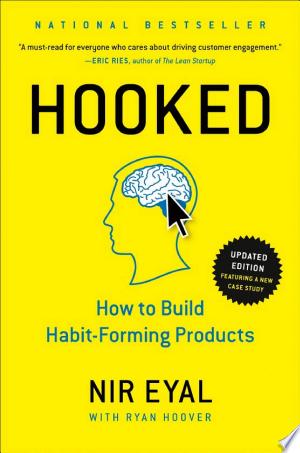
Nir Eyal con Ryan Hoover —
Category: Adquisición de Clientes & Marketing
Hooked: How to Build Habit-Forming Products is a practical guide to understanding why certain products capture our attention time and time again and how this recurrence is designed without relying solely on marketing. The core of the book is the Hook Model, a four-step cycle—trigger → action → variable reward → investment—that, when repeated, turns usage into a habit.
Eyal insists on the responsible use: do not confuse “habit” with “addiction”; designing addiction would be to deliberately harm the user. The book dedicates a chapter to the “morality of manipulation” and proposes an ethical test (Would I use it? Does it materially improve the user's life?). What is it about exactly? “Hooked” explains how successful products reduce friction, employ internal/external triggers, and reinforce behavior with variable rewards, while asking the user for a small investment (time, data, setup) that increases perceived value and likelihood of return. It is a how-to guide with cases and actionable tactics. The Hook model, step by step 1) Trigger External: notifications, emails, icons, and reminders. Internal: emotions, routines, places, and moments that push us to open an app without external stimuli (“I open X when I’m bored”). The goal of design is to migrate from external triggers to internal ones. 2) Action Action occurs when motivation, ability (ease), and trigger coincide in time —the BJ Fogg model (B=MAP) that Eyal incorporates: the simpler the action (less effort, fewer steps), the more likely it is to happen. 3) Variable Reward The reinforcement is not fixed: it varies and that’s what hooks people. Eyal distinguishes three families: Tribe: social recognition/applause (likes, comments, belonging). Hunt: search for information or opportunities (scrolling, “offers,” news). Self: progress, mastery, achievement (streaks, levels, completion). 4) Investment A small investment is requested that “holds value” and facilitates the next cycle (e.g., preferences, lists, reputation, data). This investment raises the cost of change and makes the product more valuable to the user. What you will learn with “Hooked” Diagnose where in the cycle your product “falls” and which lever (trigger, action, reward, investment) to move first. Design ultra-simple actions (aligned with B=MAP) and measure their actual friction. Choose appropriate variable rewards (tribe, hunt, self) without falling into tricks that erode trust. Ask for minimal investments that increase future value (setup, follow, contribute) and enhance retention. Apply the ethical filter of the