Lean UX: Applying Lean principles to improve user experience
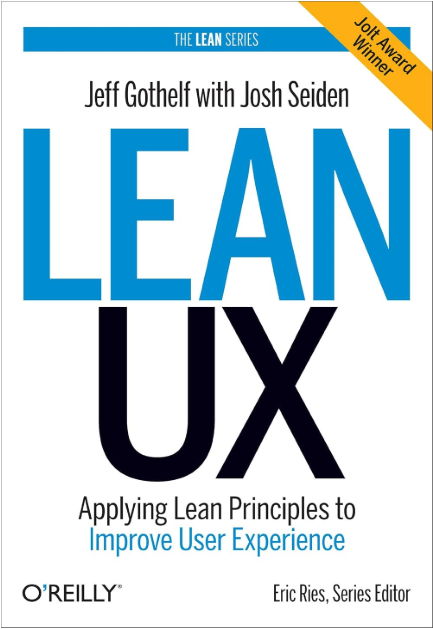
Jeff Gothelf —
Category: Diseño & Usabilidad (UX/UI)
Apply lean principles to continuously improve the design of experiences.
What is it about exactly? Lean UX adapts the principles of Lean Startup and Agile to user experience design. Its proposal is clear: stop viewing design as static deliverables and focus on continuous learning, interdisciplinary collaboration, and rapid validation cycles. The book redefines how product and design teams should work to create more effective experiences, reducing waste and accelerating results. Key Ideas: UX is not documents, but hypotheses validated with real users. The focus is on results and learning, not on deliverables. Teams must work collaboratively and multidisciplinary. Prototyping and testing quickly is more valuable than designing perfectly in theory. What you will learn from the book: How to apply Lean principles to digital design. Designing through experiments and continuous validation with users. Strategies to integrate UX within Agile teams. Techniques for rapid prototyping and iterative testing. How to measure the impact of UX on business results. What concepts can we apply to the iGaming industry: Hypotheses about players: test new promotions, tournaments, or features with small segments before scaling. Product MVPs: launch simplified versions of slots, apps, or loyalty programs to validate real interest. Rapid iteration: optimize registration, deposit, or withdrawal flows with continuous improvements. Interdisciplinary collaboration: marketing, product, design, and technology teams working together in sprints. Learning metrics: measure what the player does and feels, not just what the company assumes. Practical Toolkit: Lean UX Canvas framework to define hypotheses, assumptions, and experiments. Agile prototyping and testing techniques. Examples of validation experiments applied to digital products. Guides to align UX with OKRs and business metrics. Errors the book helps you avoid: Designing in isolation, without user feedback. Spending too much time on deliverables that do not generate learning. Waiting for the “perfect design” before testing with real customers. Treating UX as a process separate from the rest of the product team. Summary Lean UX offers a paradigm shift in how user experience is designed: less documentation, more real validation. Gothelf and Seiden show how to apply Lean and Agile principles to create user-centered products with rapid testing and learning cycles. In the iGaming industry, this approach allows for experimentation with new game mechanics, promotions, or interfaces without large initial investments, learning directly from players and building more effective and profitable experiences.