Long Walk to Freedom
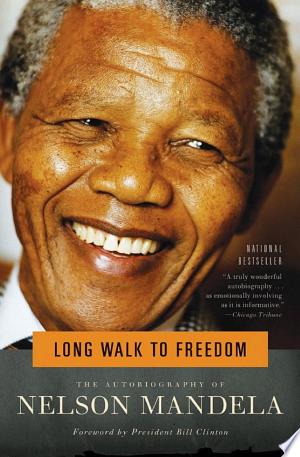
Nelson Mandela —
Category: Inspiración & Mentalidad Ejecutiva
Long Walk to Freedom is the autobiography of Nelson Mandela and one of the most powerful accounts of the 20th century regarding the struggle for human dignity. It is the story of a boy from the Xhosa ethnic group—raised in communal and justice traditions—who becomes a lawyer, a militant of the African National Congress (ANC), a prisoner for 27 years, and ultimately, the first democratic president of South Africa. The book is not only a record of events: it is a manual of moral strength, political strategy, and reconciliation.
What is it about exactly? Mandela recounts his life in sequence: Childhood and upbringing: the discipline of his traditional education, the value of a promise and the advice of elders. Political awakening: university, legal practice in Johannesburg, everyday racism, and organization within the ANC (including the creation of its youth league). Resistance and repression: campaigns of disobedience, underground activities, the Rivonia trial, and the sentence of life imprisonment. Prison: Robben Island, then Pollsmoor. Forced labor, censorship, separation from family… and, at the same time, study, organization, and discipline as acts of inner freedom. Negotiation and transition: dialogue with his captors and the government; liberation; the building of a multiracial democracy with free elections. The tone is sober and reflective: Mandela does not mythologize; he acknowledges mistakes, doubts, and contradictions, and explains why he chose, in critical moments, to change tactics without changing objectives. Central themes and lessons of the book Purposeful leadership: leadership is not charisma but service and coherence in adversity: one leads when sharing risk and bearing the cost of decisions. Discipline and strategic patience: the cause is sustained through daily habits: reading, educating oneself, training character, taking care of health, organizing time. Patience is not passivity: it is constancy with direction. Unity in diversity: Mandela insists on broadening coalitions: unions, churches, minorities, historical rivals. Sustainable victory requires including those who think differently. Firmness and pragmatism: maintaining principles (end of apartheid, universal suffrage) and being flexible in means (forms of protest, negotiation, timing). Pragmatism is not renunciation: it is choosing battles that bring one closer to the goal. Dignity and respect for the adversary: humanizing the other —even the guard— is not weakness; it is a strategy to defuse hatred and open paths for agreement. Reconciliation without amnesia: rebuilding a country requires truth and justice (recognition of harm), but also political forgiveness for a possible future. Education as freedom: studying law, history, and languages in prison was an act of self-governance. Education transforms suffering into useful learning for the day after. What you will learn by reading “Long Walk to Freedom” To differentiate ends and means: uphold principles, vary tactics. To build broad coalitions without diluting the objective. To negotiate with moral strength: firm on essentials, creative on accessories. To use personal discipline as a pillar of leadership (routines, study, physical and emotional care). To transform pain into political capital