Managing Transitions: Making the most of Change
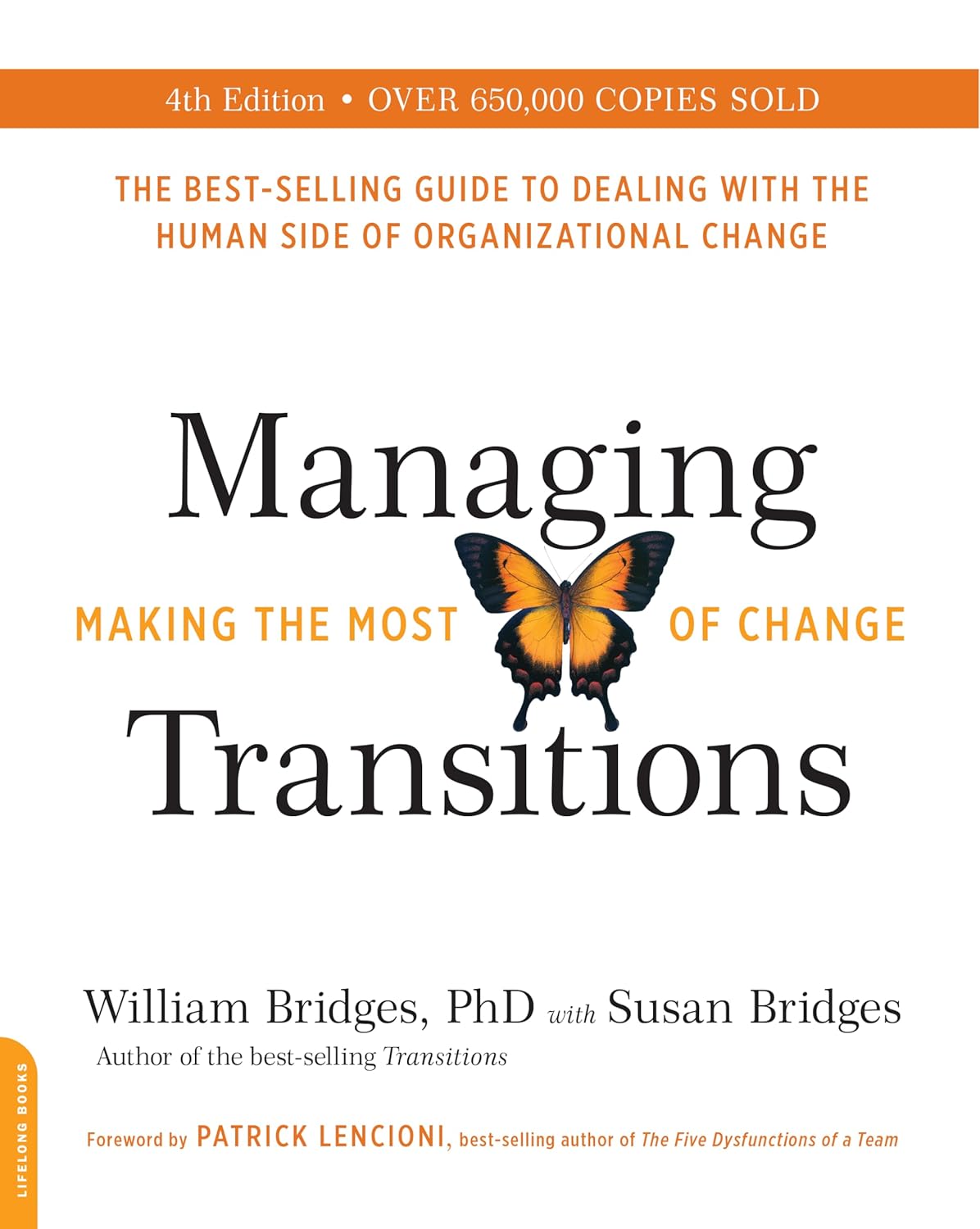
William Bridges —
Category: Gestión del Cambio & Liderazgo en Transformación
Managing Transitions is a classic that reminds leaders and organizations that success in change does not solely depend on strategies and processes, but on how the emotional transitions of people are managed. William Bridges teaches how to effectively navigate endings, zones of uncertainty, and new beginnings.
What is it about exactly? This book focuses on the difference between change and transition. While change is external (new technology, restructuring, merger, regulation), transition is the internal process that individuals undergo to adapt to that change. William Bridges explains that leaders often manage change but forget to guide their teams through the emotional and psychological transition necessary to accept it. Key ideas: Change is an external fact; transition is the human process of adaptation. Transitions have three inevitable phases: Ends, Neutral Zone, and New Beginnings. Ignoring the emotional dimension of change generates resistance and failure. Effectively managing transitions accelerates acceptance and commitment. What you will learn from the book: How to support individuals through the three phases of transition: Ends: letting go of the old. Neutral Zone: managing uncertainty and the “in-between ground.” New Beginnings: building commitment and energy in the new. Leadership strategies to handle the emotional aspect of change. Communication tools to guide teams during uncertain times. Case studies of companies that achieved successful transitions by prioritizing the human element. What concepts can we apply to the iGaming industry: Regulatory transitions: helping teams let go of old processes and adapt to new legal frameworks. Technological migrations: emotionally guiding employees and players through the transition to new platforms. Cultural change: supporting staff as they shift from a transactional model to one focused on experience and loyalty. Well-managed neutral zone: leveraging moments of uncertainty to experiment and redesign internal processes. Clear new beginnings: celebrating milestones in adopting new practices (e.g., advanced CRM, UX testing, omnichannel). Practical toolkit: Step-by-step explanation of the three phases of transition model. Communication and emotional support strategies. Exercises for leaders and teams undergoing significant changes. Practical cases of organizations that successfully managed transitions. Errors the book helps you avoid: Confusing change (external) with transition (internal). Focusing solely on processes and structures without attending to people. Ignoring the “neutral zone” as a key stage for creativity and adjustment. Accelerating new beginnings too quickly without allowing for mourning the old. Summary Managing Transitions is a classic that reminds leaders and organizations that success in change does not depend solely on strategies and processes, but on how the emotional transitions of individuals are managed. William Bridges teaches how to effectively accompany endings, zones of uncertainty, and new beginnings. In iGaming, applying this approach allows for better management of regulatory, technological, and cultural transformations, ensuring that teams not only comply with change but truly embrace it and turn it into a growth opportunity.