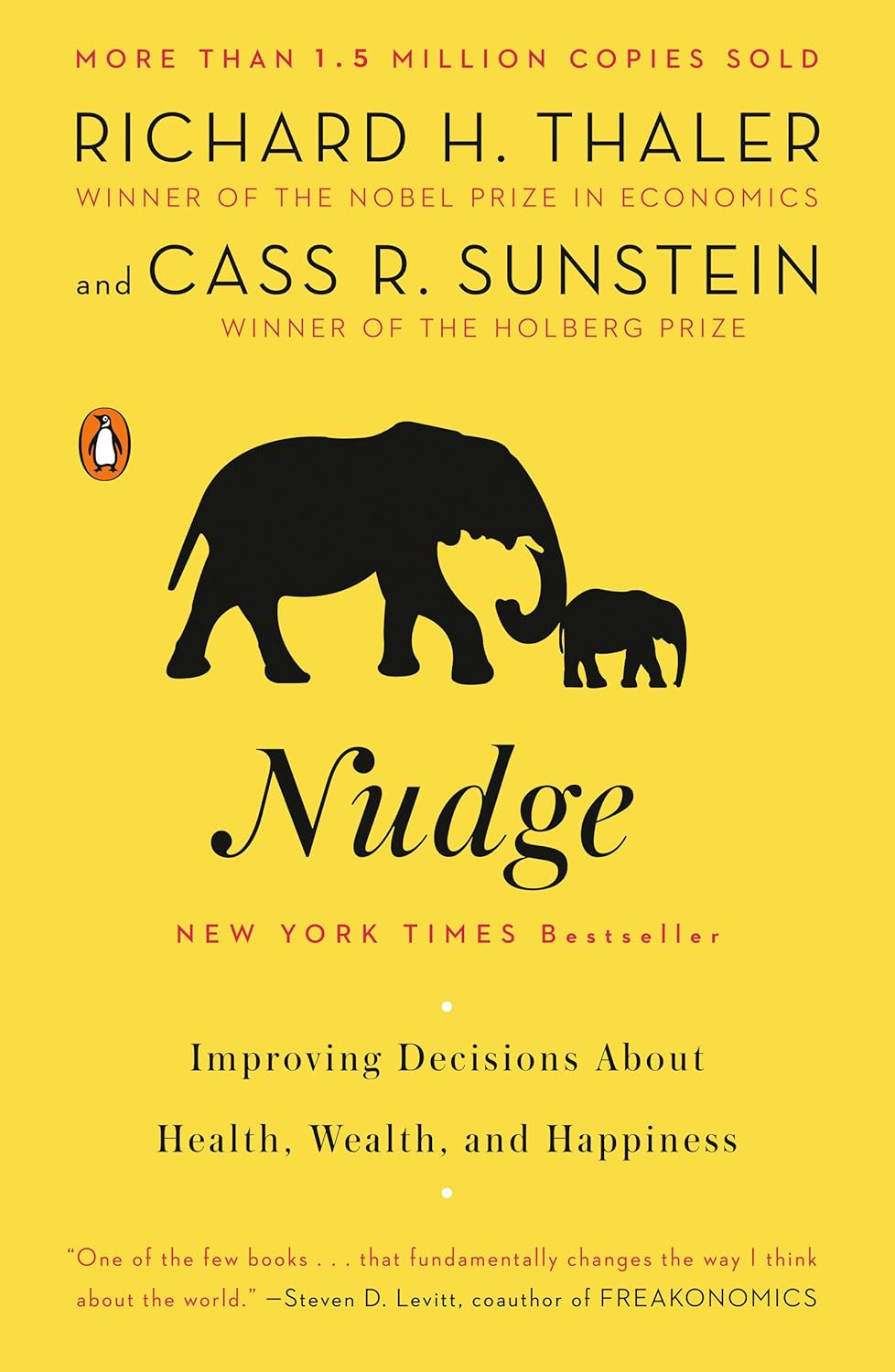
Nudge: Improving decisions about Health, Wealth, and Happiness
Richard H. Thaler, Cass R. Sunstein —
Category: Psicología del Jugador y los Clientes
Nudge is a groundbreaking work in behavioral economics that demonstrates how small nudges can guide people toward better decisions in health, finance, and well-being. Thaler and Sunstein argue that designing choice environments is inevitable; doing it well allows for the improvement of people's lives without limiting their freedom.
What is it about exactly? This book introduces the concept of “nudge”, based on behavioral economics. Thaler and Sunstein demonstrate how small interventions in decision design can guide people towards better choices without restricting their freedom. The approach, called libertarian paternalism, aims to improve health, finances, and well-being through smart choice architectures. Key ideas: Human decisions are influenced by cognitive biases and contexts. A “nudge” is a change in the decision-making environment that makes it easier to choose correctly. Designing choice environments is inevitable; doing so consciously creates a positive impact. Examples: automatic enrollment in savings plans, presenting healthier options on menus, behavioral reminders. What you will learn from the book: How behavioral economics and human decision-making work. Practical strategies for designing “choice architectures.” Tools to influence behavior without coercion. Real-life cases of nudges applied in health, savings, consumption, and public policies. How to apply libertarian paternalism in personal and organizational life. What concepts we can apply to the iGaming industry: Player onboarding: simplify registrations and deposits with smart defaults. Responsible gaming: design nudges that encourage deposit limits, time reminders, or active breaks. Promotions and offers: present benefits clearly and attractively to facilitate player decisions. Customer loyalty: use nudges in loyalty programs to encourage ongoing participation. Ethical conduct: apply nudges that favor safe and sustainable decisions, strengthening brand trust. Practical toolkit: Principles of choice architecture. Examples of effective nudges in various sectors. Strategies to implement small changes with a big impact. Guides to evaluate the effectiveness of a nudge in practice. Errors the book helps you avoid: Assuming that people always decide rationally. Ignoring the context in which decisions are made. Believing that influencing decisions means restricting freedom. Designing systems that favor unhealthy or unsustainable decisions. Summary Nudge is a pioneering work in behavioral economics that shows how small nudges can guide people towards better decisions in health, finances, and well-being. Thaler and Sunstein argue that designing choice environments is inevitable; doing it well allows for improving people's lives without limiting their freedom. In iGaming, nudges can be applied both to optimize the player experience and to reinforce responsible gaming, generating trust and sustainability in the industry.
Related videos
- Nudge - Improving Decisions About Health, Wealth, and Happiness | Animated Business Book Summary
- Richard Thaler - Nudge: improving decisions about wealth, health and happiness
- Big Think Interview With Richard Thaler | Big Think
- The surprising science of happiness | Dan Gilbert
- What Makes a Good Life? Lessons from the Longest Study on Happiness | Robert Waldinger | TED