The age of AI: Artificial Intelligence and the future of Humanity
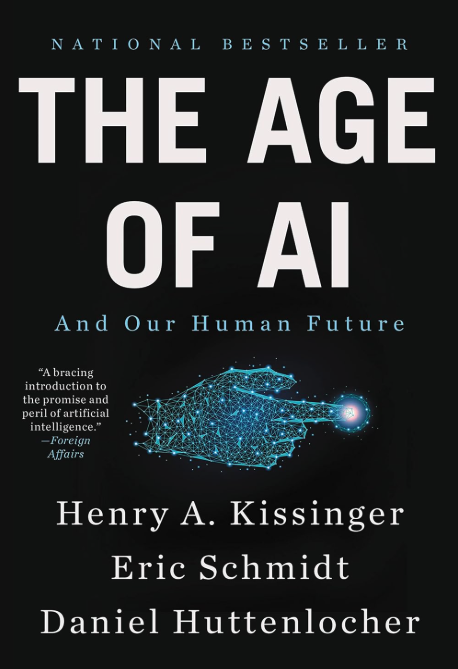
Henry A. Kissinger, Eric Schmidt, Daniel Huttenlocher —
Category: Tecnología, Datos & IA
The Age of AI offers a broad and multidisciplinary perspective on the impact of artificial intelligence on the future of humanity. Kissinger, Schmidt, and Huttenlocher demonstrate that AI will not only transform businesses and economies but also global politics and our very conception of what it means to be human.
What is it about exactly? This book explores how artificial intelligence will not only transform the economy but also politics, culture, and the way we understand humanity. The authors—a former Secretary of State, a former CEO of Google, and a technology academic—combine political, business, and philosophical perspectives to analyze the risks and opportunities of an era dominated by AI. Key ideas: AI redefines what it means to know, learn, and decide. It is not just a technological revolution, but also geopolitical and philosophical. The competition for AI dominance will reconfigure global power. New ethical and governance frameworks are needed to manage the risks. AI raises fundamental questions about autonomy, free will, and truth. What you will learn from the book: How AI will affect governments, businesses, and citizens. Scenarios of global competition and cooperation around AI. Reflections on the impact of AI on democracy, security, and human rights. Philosophical perspectives on knowledge and decision-making mediated by algorithms. Strategies for leading in a world where AI will be ubiquitous and powerful. What concepts can we apply to the iGaming industry: Global competition: anticipating how AI innovation in Asia, the U.S., and Europe can impact gaming platforms. Ethics in algorithms: ensuring that AI applied to segmentation and promotions respects transparency and responsible gaming. User experience: applying advanced AI in personalization, chatbots, and journeys without losing human control. Data governance: designing clear policies on privacy and the use of sensitive information. Strategic innovation: viewing AI not just as a technical tool but as a transformative force in business models. Practical toolkit: Cross-cutting perspectives: politics, business, and philosophy of AI. Reflections on security risks and geopolitics. Examples of how AI redefines industries beyond technology. A guide of principles for the responsible use of AI. Errors the book helps you avoid: Thinking that AI is just a technical or business innovation issue. Ignoring the ethical, social, and political implications of AI. Failing to anticipate how global technological competition will affect local markets. Underestimating the need for governance and regulation. Summary The Age of AI offers a broad and multidisciplinary view of the impact of artificial intelligence on the future of humanity. Kissinger, Schmidt, and Huttenlocher demonstrate that AI will not only transform businesses and economies but also global politics and our own conception of what it means to be human. In iGaming, these lessons help anticipate changes in innovation, regulation, and ethics, ensuring that the adoption of AI is done strategically, competitively, and responsibly.