The Art of Game Design: A Book of Lenses
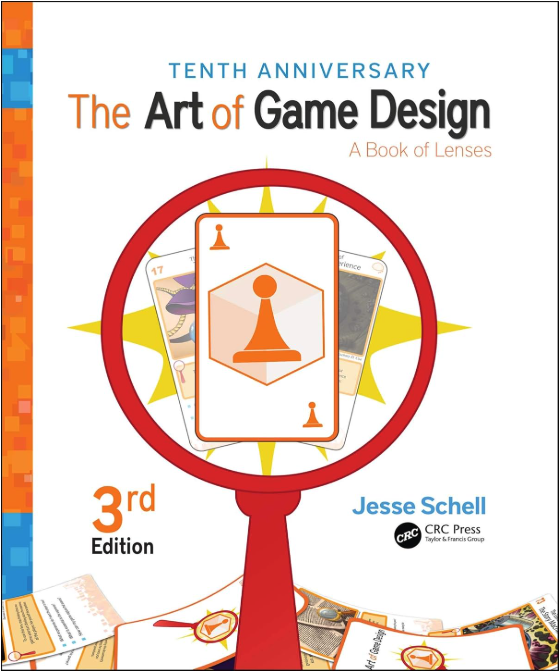
Jesse Schell —
Category: Psicología del Jugador y los Clientes
A key work in game design, focusing on player psychology and user experience.
What is it about exactly? This book is considered one of the most comprehensive guides on game design. Jesse Schell, a video game designer and professor at Carnegie Mellon, presents game design as both an art and a science, offering more than 100 “lenses” or perspectives that help analyze and improve every aspect of a gaming experience: from mechanics and narrative to player psychology. Key Ideas: Game design combines psychology, art, narrative, technology, and business. The “lenses” are conceptual tools for observing a game from multiple perspectives. A good game must balance rules, objectives, feedback, and emotional engagement. The player experience is at the center of all successful design. What you will learn from the book: How to apply the more than 100 “lenses” to analyze and improve games. Fundamental principles of designing playful experiences. Strategies for combining mechanics, dynamics, and aesthetics. How to understand player motivation and psychology. Practical tools for prototyping, testing, and refining games. What concepts can we apply to the iGaming industry: Player-centered design: optimize slots, live casino, or promotions as immersive experiences. Gamification of retention: use lenses that analyze motivation, progression, and rewards. Rapid prototyping: apply early testing of features or mechanics before the global launch. Diversity of perspectives: analyze product, marketing, and UX with different lenses. Constant innovation: use the lenses as a creative framework to differentiate in a competitive market. Practical toolkit: More than 100 lenses to examine design and player experience. Principles of balance between challenge and fun. Prototyping and rapid testing exercises. Motivation models applied to experience design. Errors the book helps you avoid: Designing from technology or trends without putting the player at the center. Ignoring the importance of narrative or emotional context. Not testing enough perspectives before launching a product. Believing that a single analytical framework is sufficient for designing complex experiences. Summary The Art of Game Design is a foundational work for designers and leaders in the gaming industry. Jesse Schell proposes a comprehensive approach based on multiple perspectives (“lenses”) that allow for the analysis of every detail of a playful experience and its optimization. In iGaming, this approach helps create more immersive, gamified, and sustainable products, strengthening the emotional connection with players and differentiating the offering in an increasingly competitive market.