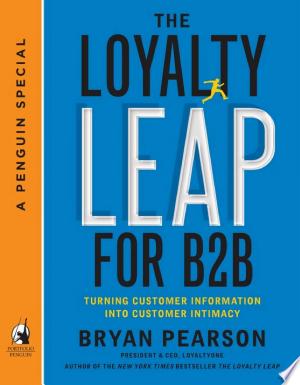
The Loyalty Leap: Turning Customer Information into Customer Intimacy
Bryan Pearson —
Category: Fidelidad del Cliente & Retención
The Loyalty Leap: Turning Customer Information into Customer Intimacy is a call to stop viewing data as "oil" and start treating it as promises. The central argument: loyalty is born when customer information is used to be more helpful and respectful, not to pursue them. Pearson—pioneer in loyalty programs—translates data science, ethics, and benefit design into a practical system for creating intimacy (relevance, recognition, and reciprocity) that the customer perceives and values.
What is it about exactly? The book explains how to move from accumulating data to creating bilateral value. It proposes a relationship of “fair exchange”: the customer shares information with permission and purpose, and the company responds with more relevant experiences, less friction, and clear benefits. Loyalty, says Pearson, is not bought with points; it is built on trust: transparency, consistency, and everyday usefulness. The pillars of the book Relevance Use data to anticipate needs and reduce friction (not to push irrelevant offers). The litmus test: does the customer feel that you save them time/effort/money? Recognition Value the relationship beyond the transaction: preferential treatment, human communication, “we listen and act”. Reciprocity Tangible benefits in exchange for data and participation: visible progress, useful advantages, and simple redemption rules. Transparency and permission Explain what you collect, why, and how you protect it. Granular permissions, easy to adjust, and communication without jargon. Design of understandable benefits Avoid opaque currencies. The customer must understand how they earn and use their benefits (clear earn & burn, without fine print). Segmentation by behavior and value Prioritize experiences based on potential/value (CLV) and needs, without penalizing vulnerable segments. Data governance Policies, controls, and audits that ensure ethical and secure use of information; data is a trust asset. Measurement of real impact Less “vanity metrics”, more incrementality (test/control), cohorts, and health signals of the relationship (retention, redemption, satisfaction, referrals). What you will learn with “The Loyalty Leap” To define the value exchange: what the customer gains today in exchange for their data today (not a vague future promise). To design benefits that matter (access, time, certainty), not just discounts. To build a permission model that is simple, clear, and reversible. To segment by need and value with empathy (not all customers want the same thing). To turn data into operational actions (timely messages, shorter processes, proactive support). To measure true impact: retention, repeat business, healthy redemption rate, satisfaction, and organic referrals. How to apply “The Loyalty Leap” in iGaming The work does not focus on betting; the following translates its principles to a regulated environment. 1