The Psychology of Money
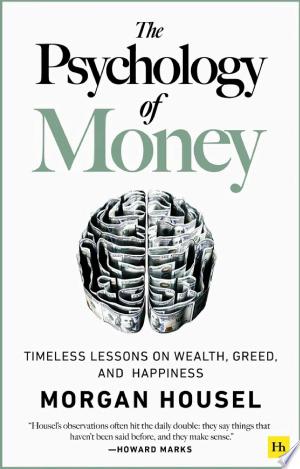
Morgan Housel —
Category: Psicología del Jugador y los Clientes
The Psychology of Money is a book about how we think and feel about money. Its central thesis: behavior (biases, expectations, risk tolerance, social comparison) matters more than formulas. Housel distills short ideas—stories and essays—that explain why smart people make poor financial decisions and how to build sustainable wealth (not just high income).
What is it about exactly? Housel separates two planes: Being rich vs. being truly wealthy (wealth): “rich” refers to visible income; wealth is what is not seen—savings, margin of maneuver, freedom. Gaining wealth vs. maintaining it: to achieve it, you take risks; to preserve it, you need defense (humility, margin of safety, avoiding ruin). The book explains why compound interest is counterintuitive, how luck and risk coexist, why comparison destroys well-being, and why it is more useful to be reasonable than “perfectly rational”. Key ideas: Behavior > IQ: savings, patience, and consistency surpass brilliant but inconsistent forecasts. “Enough”: never risk what you have and need for what you don’t have and don’t need. Define an explicit “enough”. Tails and extremes dominate: a minority of events (crashes, star products) explain a large part of the results. Design to survive the extremes. Rational no, reasonable: a strategy that lets you sleep well is better than the “optimal” one you abandon at the first downturn. Independence as a goal: the true return of money is time and control of agenda: freedom to choose. Risk & luck: don’t attribute everything to merit nor everything to chance. Learn without over-generalizing unique cases. Margin of safety: redundancy, cash, sober fixed costs. Resilience may seem “inefficient”… until it saves the company. Personal history of money: we grew up in different cycles; that’s why we disagree. Respect others' horizons and tolerances. Reasonable optimism: in the long term, progress is likely, but the path brings volatility and setbacks (the “price” of return). What you will learn from “The Psychology of Money” To separate income from wealth: focus on savings rate and freedom, not on ostentation. To design decisions that won’t break you when extremes arrive. To bear the price of the long term (volatility) without abandoning. To avoid comparisons that impoverish satisfaction and lead to over-risking. To align money with values: “What life do I want to finance?” before “What return am I pursuing?”. How to apply the book in iGaming (operators) 1) Invisible wealth: invest in what is not seen Infrastructure and trust: clear KYC, withdrawals , end-to-end observability, fraud prevention. They don’t “sell” in the short
Related videos
- LA PSICOLOGÍA DEL DINERO (POR MORGAN HOUSEL)
- Lecciones que cambian la vida de La psicología del dinero
- 9 lecciones atemporales sobre el dinero del hombre más rico de Babilonia
- When money isn’t real: the $10,000 experiment | Adam Carroll | TEDx
- Where in the world is it easiest to get rich? | Harald Eia | TEDx