Weapons of Math Destruction: How Big Data increases inequality and threatens democracy
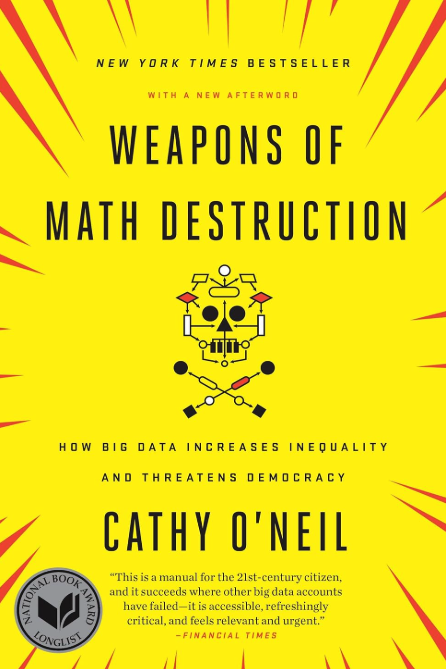
Cathy O'Neil —
Category: Tecnología, Datos & IA
Weapons of Math Destruction is a powerful warning about the risks of irresponsible use of Big Data and artificial intelligence. Cathy O'Neil demonstrates that when algorithms are opaque, massive, and harmful, they can become weapons that generate inequality and erode democracy.
What is it about exactly? This book analyzes the dark sides of Big Data and algorithms. Cathy O’Neil, a mathematician and data scientist, explains how certain algorithmic models—poorly designed or used without oversight—can generate inequality, injustice, and a lack of transparency. She calls them Weapons of Math Destruction (WMDs) because they are opaque, large-scale, and harmful, with negative impacts on education, employment, justice, and politics. Key Ideas: Not all algorithms are neutral: many reinforce existing biases. WMDs are opaque, massive, and uncontrollable, with harmful social effects. Poorly managed Big Data can increase inequality instead of reducing it. It is urgent to design algorithms with transparency, fairness, and accountability. What you will learn from the book: Examples of how algorithms have harmed students, workers, and citizens. How to identify data systems that may be unfair or harmful. Why ethical and regulatory oversight is key in the era of Big Data. The difference between responsible analytical models and WMDs. Strategies to demand greater transparency in the use of algorithms. What concepts we can apply to the iGaming industry: Responsible gaming: preventing segmentation algorithms from reinforcing risky behaviors in vulnerable players. Data transparency: designing clear systems for promotions, limits, and VIP programs. Bias prevention: ensuring that personalization does not discriminate based on age, economic profile, or sensitive behavior. Compliance and ethics: anticipating regulations on AI and Big Data in digital entertainment. Player trust: building auditable algorithms that reinforce reputation and sustainability. Practical toolkit: Principles for detecting Weapons of Math Destruction. Cases of negative impact from algorithms in various sectors. Strategies for responsible and ethical design of predictive models. A guide to applying transparency and accountability in data projects. Errors the book helps you avoid: Believing that algorithms are always objective and neutral. Using Big Data solely to maximize revenue without assessing social risks. Allowing algorithmic opacity to damage trust in the organization. Ignoring the need for regulation and auditing in AI and Big Data. Summary Weapons of Math Destruction is a powerful warning about the risks of irresponsible use of Big Data and artificial intelligence. Cathy O’Neil demonstrates that when algorithms are opaque, massive, and harmful, they can become weapons that generate inequality and erode democracy. In iGaming, this book encourages the design of transparent, auditable, and responsible systems that balance growth with player protection and social trust.