Mexico closed the World Cup with record betting and the 1947 law
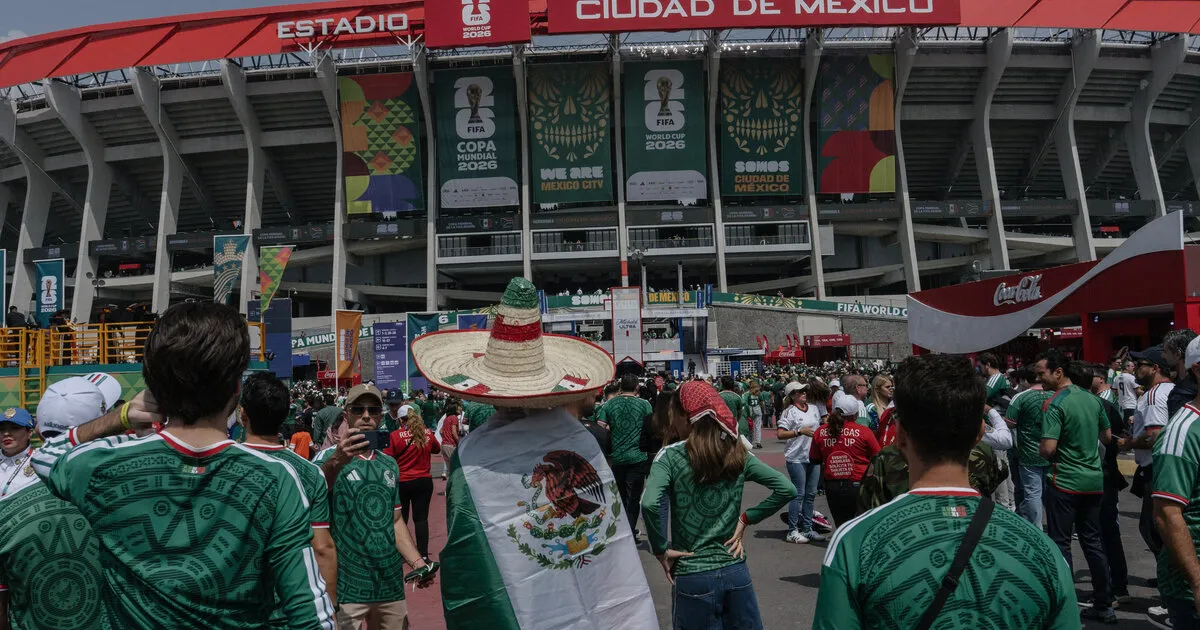
Mexico passed the test. Between June 11 and July 19, 2026, the country hosted the FIFA World Cup alongside the United States and Canada, and the gambling industry responded with the largest operational volume in its history. What did not change during those five weeks was the legal framework governing this activity. The Federal Law on Games and Lotteries, enacted in December 1947 and administered by the Ministry of Interior through the General Directorate of Games and Lotteries, remains the same text drafted when the internet, mobile phones, and electronic payment systems did not exist.
The data left by the competition comes from the sector's own association. Miguel Ángel Ochoa Sánchez, president of the Association of Permitholders, Operators, and Suppliers of the Entertainment and Gambling Industry, explained that several operators registered growth of between 30% and 40% compared to their daily demand during the peak moments of the tournament, and that over the five weeks, they practically doubled their customer base, not just their betting volume.
The most significant change occurred in the product. Live betting, placed while the match is in progress, grew between 60% and 150% depending on the operator. The incorporation of hydration breaks in matches opened additional windows for users to operate during the game, and the sector's technological infrastructure absorbed this volume without breakdowns. Some companies now report more than 70,000 betting combinations available per match, a level of granularity that can only be sustained with artificial intelligence and massive real-time data processing.
Ochoa Sánchez highlighted that Mexico was among the most active markets in the world for international platforms during the tournament, and that activity remained high even after the elimination of the Mexican National Team, sustained by the follow-up of the final stages. To gauge prior expectations, H2 Gambling Capital had projected some 2.5 billion dollars in bets from Mexico during the World Cup, considering only legal sportsbooks, a figure just below the 2.9 billion projected for the United States despite the size difference between the two markets. The challenge the industry now identifies is no longer one of capacity but of retention.
The main gap in the Mexican regulatory framework is conceptual and has not moved. There are no exclusive licenses to operate online gambling only. Every digital platform must be linked to a permit granted by the Ministry of Interior to a physical establishment, and foreign operators wishing to enter the market need to establish a local legal entity and partner with an already authorized permitholder. This model produced an intermediation ecosystem where international operators can adhere to third-party permits without undergoing direct evaluation by the authority.
The consequence is quantified. The association estimates that more than 60% of online bets placed by Mexicans are executed on platforms operating from abroad, outside the national regulatory framework and without contributing to the Mexican treasury. This is a competitive asymmetry that precisely punishes those who comply.
The reform has been announced for years. The Ministry of Interior opened working groups with the industry throughout 2025, President Claudia Sheinbaum publicly confirmed in November of that year that the law would be updated to incorporate digital gambling and strengthen financial oversight, and the project reached its final drafting stage. In parallel, legislators presented their own initiatives, the most ambitious of which proposes to completely replace the 1947 text and create the National Institute of Games and Lotteries, a body with technical and operational autonomy that would replace the current General Directorate, with express powers to audit establishments in real time and to block and sanction unlicensed digital platforms. None of this has been approved. The industry recalls that since 1997, more than a dozen reform initiatives have been presented without any of them prospering.
Where there was a material change was in taxation. On November 7, 2025, the decree reforming the Special Tax on Production and Services Law was published in the Official Gazette of the Federation, effective January 1, 2026, which raised the rate applicable to gambling and lotteries from 30% to 50%. For the first time, the law specifically taxes digital gambling and lotteries offered by both residents in Mexico and foreigners, through the internet, electronic means, or digital intermediation platforms, and applies to non-resident foreigners without a permanent establishment when the service recipient is in national territory. Non-compliance enables sanctions that include temporary blocking of access to the provider's digital services, with publication of the name and blocking date on the Tax Administration Service portal.
The package also incorporated substantive technological obligations. Digital game providers must operate a central betting system that records and totals all transactions, a cash and cash control system, and a mechanism that provides the tax authorities with online and real-time information from both records. In effect, it is a modern fiscal supervision regime mounted on a substantive law nearly eighty years old.
The Ministry of Finance estimated additional revenue of over 5 billion pesos in 2026 due to this increase. The industry disagrees with the calculation and warned since its approval in the Senate that the measure increases operational costs, jeopardizes the viability of smaller companies, and discourages national and foreign investment. Its central argument is consumer behavior. A legal operator that absorbs a 50% burden adjusts odds and cuts bonuses to maintain its margin, and that price difference is exactly the incentive that pushes players towards offshore platforms that pay nothing. Regional comparison reinforces the point, although it should be read carefully because each jurisdiction defines its tax base differently. Brazil applies 12% on GGR, Colombia 15%, and Peru 12%, while in Mexico, the IEPS rate operates on the value of bets according to the rules of the law itself.
Beyond the pending reform, there are three active files. The first is transparency. On May 13, 2026, Deputy Rubén Ignacio Moreira Valdez presented to the Permanent Commission a proposal with a point of agreement urging the Ministry of Interior to publish in open data format all current permits for casinos and sportsbooks, to break down by federal entity which establishments operate, which are suspended, and which were closed in the last five years, and to disclose the complete universe of authorized electronic platforms. The context cited by the legislator is that the Superior Audit Office of the Federation documented 5,336 permits issued for gambling between 2019 and 2023.
The second is judicial. On July 14, 2026, the Supreme Court of Justice of the Nation listed amparo review 257/2025, promoted by IGT-Mexicana de Juegos, suspending the discussion of a project that would endorse the restrictions imposed on the Regulations of the Federal Law on Games and Lotteries in 2023, including the prohibition of installing slot machines in new establishments, the tightening of conditions for issuing permits, the reduction of their validity, and the elimination of the operator figure. Several collegiate courts had already declared these reforms unconstitutional, granting amparos that the authority is obliged to comply with, so an eventual endorsement would consolidate a two-speed market depending on the judicial outcome for each company. The third front is reputational. The proximity of the FATF evaluation placed the sector under additional scrutiny regarding money laundering prevention, after the Financial Intelligence Unit blocked accounts of thirteen physical and digital establishments in November 2025 and the US OFAC sanctioned individuals and companies linked to Mexican sportsbooks.
The World Cup demonstrated something that often remains outside the regulatory debate. The ability to process millions of transactions per minute, manage tens of thousands of markets per match, and sustain live betting with minimal latency is not provided by the operator alone. It is provided by technological platforms, content providers, payment processors integrated into SPEI and Mexican banking, identification solutions adapted to the local market, sports data providers, and legal consultants specializing in Ministry of Interior regulations. With the new IEPS regime requiring online and real-time reporting, the choice of technological provider ceased to be a product decision and became a compliance decision.
The formal industry currently operates with 423 casinos in 30 federal entities under 38 permitholding companies, plus about 80 recognized online betting platforms, generates nearly 200,000 direct and indirect jobs, and contributes approximately 0.5% of the Gross Domestic Product, according to association figures. What remains pending is the framework that this scale deserves, with direct online licenses instead of adherence to third-party permits, a tax regime that makes formalization profitable instead of expelling it, a regulator with real technical capacity to audit and sanction, and a public registry that allows any citizen to know with whom they are betting. The ordinary session period of Congress starting in September is the next concrete window. If the initiative does not advance, the market will continue to grow anyway, only most of that growth will continue to occur where the Mexican State cannot see it, tax it, or protect those who gamble.
Tags: Federal Law on Games and Raffles, 50% IEPS in Mexico, FIFA World Cup 2026, National Institute of Games and Raffles