Betting covered 28 percent of Serie A salaries
There's a way to measure the void left by the Brazilian ban that doesn't involve the clubs' total budget but rather their player payroll, and there the numbers change scale. A survey published by ge and reproduced by BNLData compared main sponsorship contracts against estimated payrolls of the 14 Serie A teams that had sportsbooks on their jerseys, and the result is that these agreements covered, on average, 28.2% of what is spent each month on players, the annual equivalent of more than three months' salary.
The aggregate gives the dimension of the block. The contracts totaled approximately BRL 1.010 billion (USD 199.4 million) annually, or BRL 84.5 million (USD 16.7 million) per month, against payrolls in those 14 clubs that reached BRL 299.3 million per month, about USD 59.1 million. These figures emerge amidst the ongoing discussion about the impact of Provisional Measure No. 1.394/2026, and it's worth remembering that President Luiz Inácio Lula da Silva, when announcing it on September 25, said that sportsbook sponsorship represented between 6% and 7% of a club's budget. The survey itself explains the difference: the proportion depends on what expense it's measured against, because against the total budget, which includes television rights, ticket sales, and transfers, the impact is smaller, while on salaries it is decisive.
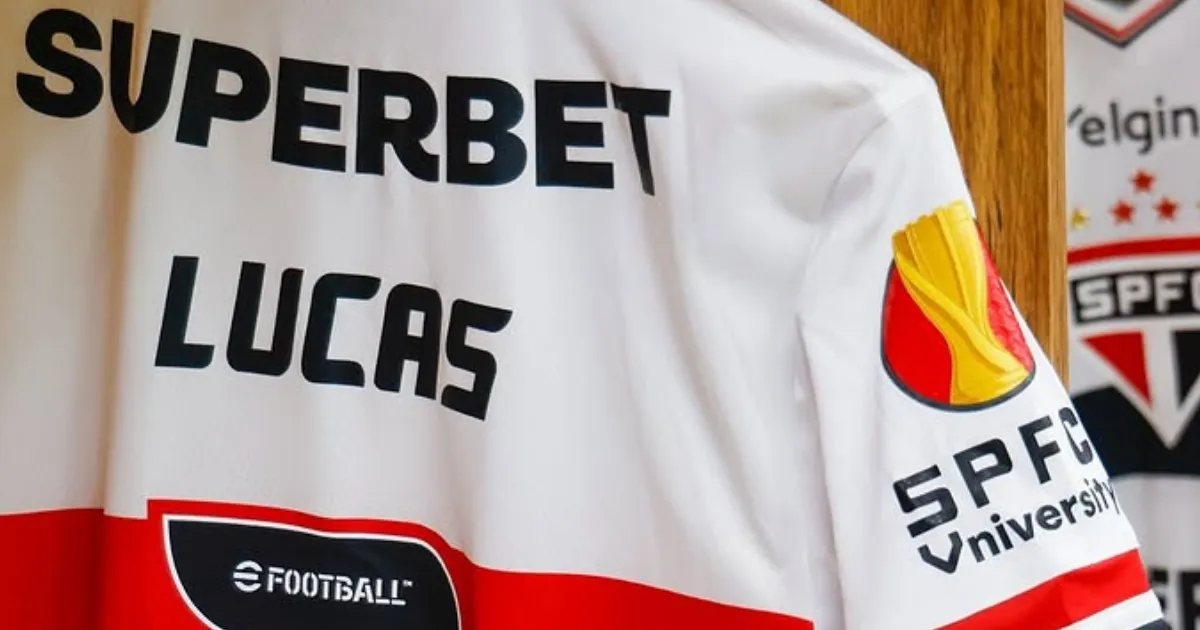
São Paulo is the extreme case. The contract with Superbet, BRL 113 million per year, about USD 22.3 million, translates to BRL 9.4 million per month (USD 1.86 million) and, measured against a payroll estimated at BRL 18 million, about USD 3.55 million, covered 52.3% of what the club pays its squad, more than six months of salaries per year.
Behind them is Flamengo, which received BRL 268.5 million per year, about USD 53 million from Betano, against an estimated payroll of BRL 50 million per month, about USD 9.87 million, meaning 44.8% of what is spent per month on players, or 5.4 months of salaries. If only the fixed component of the contract is considered, BRL 220 million (USD 43.4 million) as mentioned by Folha de S.Paulo, the coverage drops to 36.7% and 4.4 months. Third is Corinthians, whose BRL 150 million per year, about USD 29.6 million from Esportes da Sorte, represented 41.7% of an estimated payroll of BRL 30 million per month, about USD 5.92 million, or about five months of remuneration. Further down were Vasco, with 26% of its monthly payroll, Palmeiras with 27.8%, and Botafogo with 30.6%.
The source itself advises reading all this with caution and explains why. Payroll estimates do not follow a standardized methodology, and neither clubs nor football corporations always report separately what they spend on the squad, with values compiled from financial statements and information requested from teams. Palmeiras shows how much this can shift; ge's ranking uses BRL 30 million per month for payroll, about USD 5.92 million, while financial statements indicate around BRL 45 million per month, about USD 8.88 million, for the entire football department, and with that second base, Sportingbet's contribution would cover 18.5% of the expense, equivalent to 2.2 months per year. The analysis also only looks at the main sponsorship, so performance bonuses from some agreements, promotional activities, and billboard advertising are excluded.
Loss projections and other surveys point in the same direction. Flamengo's president, Luiz Eduardo Baptista, calculated a loss for his club exceeding BRL 430 million, about USD 84.9 million, combining sponsorship and other sector revenues, and for Brazilian football as a whole, it reached BRL 2.5 billion, about USD 493.5 million. The consultancy Convocados, cited by CNN Brasil, places revenue from sportsbooks at 33% of what clubs earn through commercial and marketing channels, estimated at BRL 3.069 billion, about USD 605.8 million, and estimates that for most teams, these contracts account for between 5% and 8% of the total budget, with exceptions for Flamengo, at 12.85%, and Corinthians and São Paulo, both at 10.5%. During 2025, according to data cited by Folha de S.Paulo, Serie A clubs had collected BRL 1.030 billion, about USD 203 million, from this type of sponsorship. Not all were exposed; Internacional, Coritiba, Bahia, and Athletico-PR did not have sportsbooks on their jerseys, while Mirassol and Red Bull Bragantino carried them in secondary positions on their shirts.
The value of this survey lies in resolving the discussion about the 6% or 7% raised by the Government. Both figures are correct and measure different things: sponsorship is indeed a modest fraction of a large club's complete budget and is, at the same time, between four and six months of the players' payroll, which is the least postponable commitment a sports institution has. This distinction is exactly what reached the Supreme Federal Court last week, when five clubs warned in a joint statement that three months of delay in salary payments or image rights enable the termination of sports employment contracts and the release of players. Placed side by side, the two pieces of data describe the same risk: the average 28.2% is not a profitability problem but a cash flow one, and the legal deadline that turns a delay into squad loss is shorter than the time Congress has to decide on the measure.
Tags: Brazil, Serie A, sports sponsorships, wage bill