Lula tells UN that Brazil will not tolerate the betting model
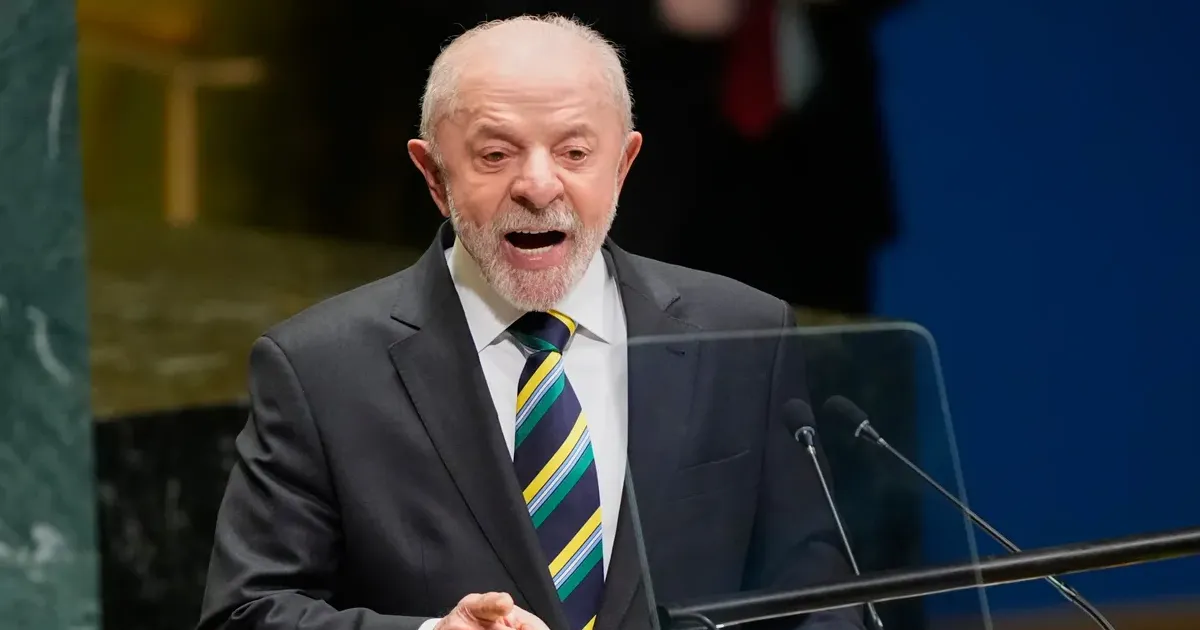
Luiz Inácio Lula da Silva took his fight against gambling to the biggest stage available to him. Addressing the 81st United Nations General Assembly in New York, he described the industry as a multi-billion dollar machine that "turns vice into profit," argued that its accelerated growth is leaving families in debt and homes broken, and concluded unequivocally: this business model, he said, will not be tolerated in Brazil.
The tone of the speech, however, does not match what is brewing in Brasília. According to Platô, the president could sign a Provisional Measure upon his return from the United States, and the alternatives on the table are much more limited than a general ban: placing limits on advertising in the sector and removing certain online casino games, with slots as the main target, from the scope of Law 14.790/2023. In that scenario, sports betting would continue to operate.
The cut would not be minor for companies. Online casino gaming contributes a central portion of the revenue generated by licensed companies, so removing it from the legal framework would fundamentally change the business equation.
Industry associations have already quantified the risk. The National Association of Games and Lotteries (ANJL) estimates that if the regulated market disappears, illegal platforms would go from handling 41 percent of Brazilian online gaming to taking 82 percent, and it counted 6,409 clandestine domains active during a single week, from September 11 to 18. From the Brazilian Institute for Responsible Gambling (IBJR), its executive president Carlos Lima called for measuring what has been achieved in the first phase of regulation and cited a study by LCA Consultoría Económica: the estimated portion of the illegal circuit dropped from a range of 41 to 51 percent during 2025 to another of 38 to 44 percent this year.
The common argument of both entities is the same. Shrinking the authorized market does not eliminate demand; it pushes it towards operators who do not pay the same taxes, do not answer to a regulator, and do not offer the same user protections.
Football provides its own accounting. With data cited by EFE, during 2025, 18 clubs in the Brazilian first division had a sportsbook as a sponsor, and the combined outlay reached R$1.142 billion (US$223 million), a figure equivalent to 7.97 percent of all revenue for those teams. Added to this are agreements with television channels and the commercial names of competitions such as the Campeonato Brasileiro and the Copa do Brasil. In their statement, the clubs reiterated the warning from the associations: if the legal market falls, demand shifts, it does not evaporate.
The other pillar of the debate is fiscal. Between concessions and taxes, operators contributed R$9.950 billion (US$1.949 billion) during 2025. Between January and July of this year, the figure already climbed to R$8.747 billion (US$1.713 billion), 80 percent above the same period in 2025.
The inquiry made on Monday in New York completes the picture. In his bilateral meeting with Yamandú Orsi, Lula showed interest in the Uruguayan scheme, which is more restrictive than the Brazilian one: sports betting concentrated in Supermatch, under state control, and online casino games directly prohibited.
Brazil regulated fixed-odds betting on January 1, 2025, under federal licenses granted and supervised by the Secretariat of Prizes and Betting. The final text of the provisional measure is not yet known, and the gap between what Lula says publicly and what is discussed behind closed doors is the margin within which the real scope of the cut will be defined.
Tags: Luiz Inácio Lula da Silva, UN General Assembly, illegal betting market, Brazilian football sponsorship