Twenty-three Brazilian clubs take the ban to the Supreme Court
At least 23 Brazilian football clubs have filed petitions with the Supreme Federal Court aiming to reverse the effects of the provisional measure that outlawed fixed-odds betting. The core argument in all these filings is the same: existing sponsorship contracts and the lack of a transitional period to allow them to reorganize their revenues. Flamengo, Botafogo, and São Paulo are among those who requested to intervene in the case. The regulation, signed on September 25 by President Luiz Inácio Lula da Silva, ordered the cessation of platform operations, whose websites and applications were blocked on October 6. It also prohibited advertising and sponsorship from the sector, as reported by Globo Online.
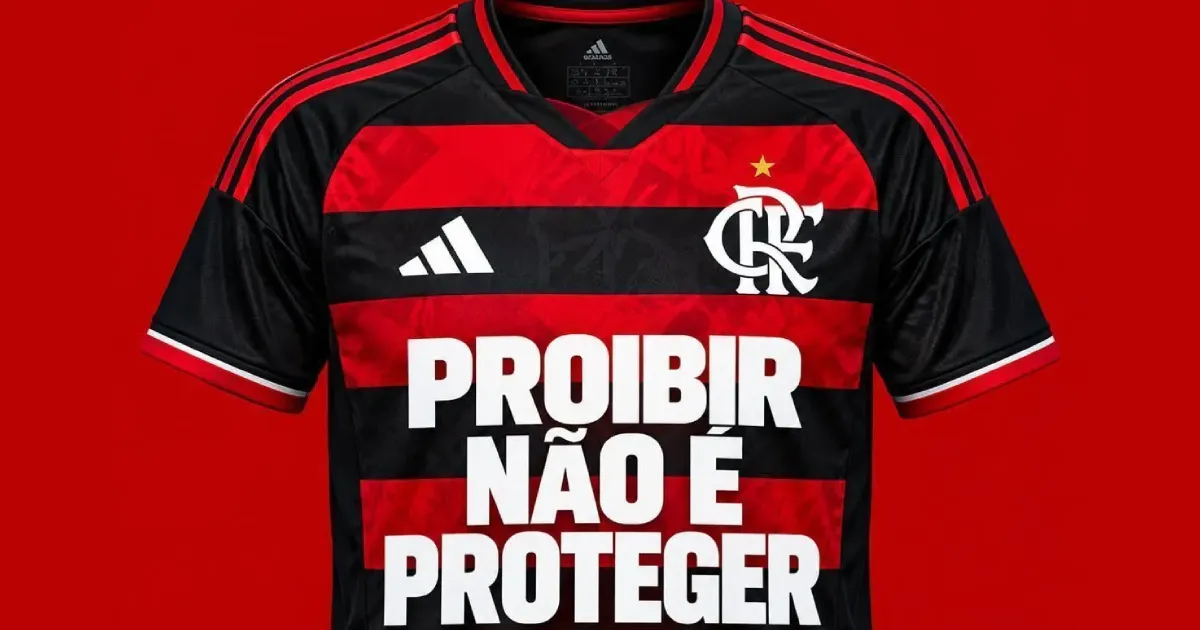
Flamengo was the first to act, with a petition filed in the office of Luiz Fux, the minister overseeing the case. The Rio de Janeiro club stated immediate revenue losses for the coming year of between USD 79.7 million and USD 85.7 million, equivalent to up to BRL 430 million. It argues that the impact is not limited to professional football because sponsorship money also supports other disciplines, including Olympic sports. Its president, Luiz Eduardo Baptista, has publicly opposed the measure since its announcement in September. On October 8, during the match against Santos, the club replaced the Betano brand on its jersey with the message "prohibiting is not protecting," a phrase that also appeared during the week on stadium billboards where the Brazilian Championship is played.
Flamengo's filing contains a material argument that no other club developed in such detail: the physical impossibility of immediate compliance. Removing brands from Maracanã stadium spaces and jerseys is not a software operation, and the club states it as such: "A sports sponsorship is not an advertisement that is removed from a website." The filing details why: the brand is printed on garments that the apparel supplier manufactured months in advance, which have already been sold and are now worn by millions of fans, and it is also on the billboard mounted in the stadium and on the LED panel programmed for broadcast.
Botafogo brought a different problem to the Supreme Court: its own restructuring. The club became a Football Public Limited Company in 2021 and entered judicial recovery in May 2026. The approximately USD 10 million annually contributed by Vbet as its main sponsor was included in the financial projections used to create the plan presented to its creditors. Therefore, it argues that the contract's termination is not limited to sporting activities; removing the sponsorship overnight, the filing states, compromises the execution of a judicially supervised recovery plan, with repercussions for all its creditors.
The salary risk was highlighted in a joint presentation by five clubs. Portuguesa, Guarani, Vitória, Ponte Preta, and São Paulo warned that cutting contracts overnight could jeopardize salary payments and operational expenses for 2026. The filing describes the sequence: with the main commercial revenue source removed mid-season, clubs begin to delay salaries, leading to the exact regulatory consequence: three months of arrears authorize the termination of sports employment contracts and the release of players. São Paulo detailed its agreement with Superbet, currently suspended and undefined between the parties, which projected BRL 95 million (USD 18.9 million) for 2026 and a total of BRL 678 million (USD 135.1 million) until 2030. It added that it has about 15,000 jerseys in stock stamped with the sponsor's brand, 10,000 for e-commerce and 5,000 for physical stores.
The calculations of smaller clubs follow the same trend. Vitória estimates a monthly shortfall of BRL 2.5 million (USD 498,000), which by the end of 2027 would accumulate to BRL 55 million (USD 11 million). Guarani, Ponte Preta, and Portuguesa, which currently do not have a main sponsor from the sector, argue that the prohibition closes off the possibility of securing new commercial resources. Guarani also mentioned what all this implies for its own judicial recovery.
A second collective presentation includes 16 clubs, with Juventude, Goiás, Chapecoense, Avaí, Atlético-GO, Ceará, Cruzeiro, and Fluminense among the signatories. This group quantified the sector's weight: sports betting sponsorships totaled over BRL 1 billion (USD 199 million) in 2025, distributed among Serie A clubs, representing around 34% of those clubs' commercial revenue for the year. They warn that the cut would impact projects dependent on these funds, such as Paralympic and Olympic disciplines, women's football, and youth divisions. They also add a fiscal argument: the prohibition would reduce the projected revenue from the Selective Tax on betting and could create pressure to increase the rate that tax reform anticipates for the Contribution on Goods and Services.
The volume of presentations changes the nature of the case, and that is what is relevant. Until now, the legal challenge against the measure was sustained by operator associations, with actions and requests for injunctions that have been dormant in Fux's office without resolution since last week. With 23 clubs requesting to intervene, the court is no longer discussing only the freedom of enterprise of a sanctioned sector but also the contracts of third parties who were not targets of the prohibition and who signed under a framework that the federal government itself had established—a terrain where legal certainty weighs more than gambling policy. It is also worth carefully examining Vitória's account, because BRL 2.5 million monthly from October 2026 until the end of 2027 totals approximately BRL 37.5 million, not the BRL 55 million the club declares—a difference the filing does not explain and suggests a different calculation basis than simply multiplying the monthly fee by the remaining months. Two of the central figures in these presentations were already circulating before the filing: the 34% of Serie A commercial revenue had been published in early October by the sector's associations themselves, and the jersey with the protest slogan had been in use since October 8. Thus, what is new here is not the economic diagnosis but the channel through which it is beginning to move. The calendar is the other factor making the claim urgent, because federal authorizations expire on October 25, and the parliamentary commission that could correct the measure will not push the plenary agenda until November. This means any legislative remedy will find contracts already rescinded and jerseys already reprinted. This leaves the court facing a decision about consummated damage rather than regulatory design, which is precisely the area where an injunction carries more weight than a final judgment.
Tags: Brazilian Supreme Court, Brazil betting ban, sports sponsorships, Flamengo