Club fund would absorb 76% of online gambling profits
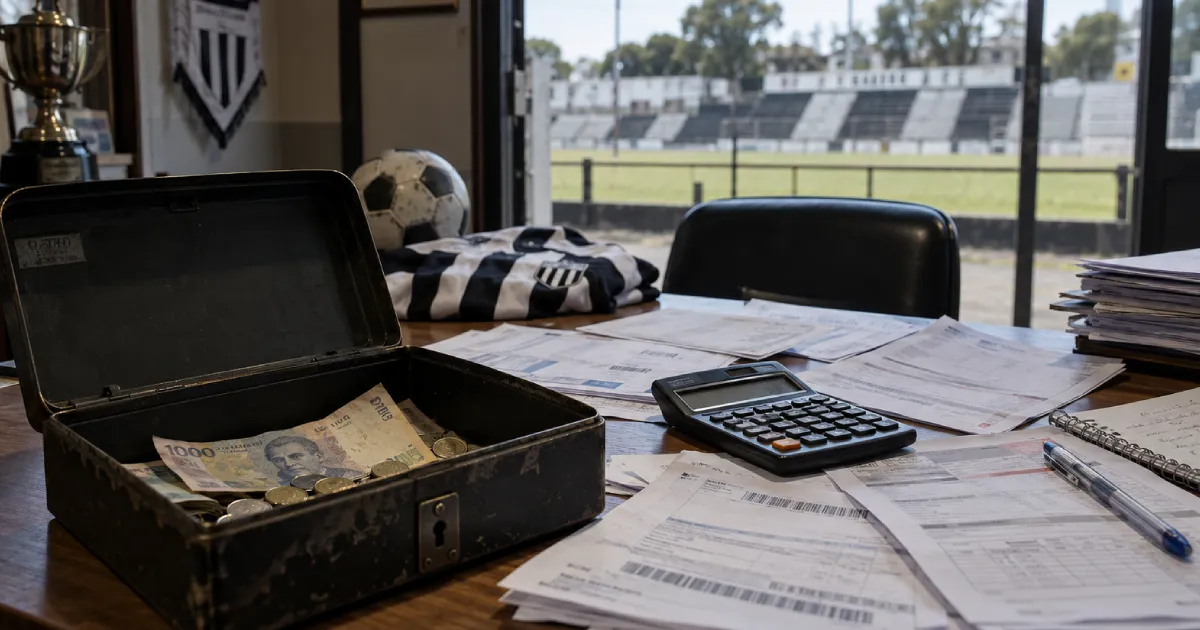
The most consequential figure in the debate over the Buenos Aires Province bill was provided not by a lawmaker, but by the regulator itself,and it was not about illegal gambling. Carlos Gallo, provincial Director of Gaming and Operations, reported that the 3 percent levy on prizes that the bill seeks to allocate to a fund for community clubs and sports scholarships amounted to AR$532m between January and September. He then added the metric that puts the figure into perspective: that amount represents 76 percent of the gross profit generated by online gambling, meaning, in his view, it will directly impact how betting operations function.
The presentation took place on Monday, October 19, before the Committee on Games of Chance, Lottery, and Gambling Addiction Prevention of the provincial Chamber of Deputies, chaired by Micaela Olivetto of Fuerza Patria. Gonzalo Atanasof, president of the Instituto Provincial de Lotería y Casinos, was accompanied by Gallo and Sebastián Silvestre, head of the Legal department, and outlined the purpose of their visit: they want to be part of the discussion to contribute data and firsthand knowledge to help produce the most effective legislation possible, according to reports published by Diputados Bonaerenses.
The head of the regulatory agency built his argument around the scale of the black market, using two budget benchmarks to illustrate its size. To highlight the turnover of illegal activity, he compared it to the US$1bn from the latest IMF disbursement and the US$1.4bn allocated to the national Ministry of Justice, concluding that illegal gambling in Argentina reaches US$3.6bn,three times those two figures combined. He added the estimate circulated during the meeting that four out of every five pesos wagered are illegal, along with an institutional takeaway: illegal gambling must be tackled by all three branches of government, as prosecuting clandestine platforms cannot be left solely to the regulator.
Atanasof also defended the safeguards already implemented by the licensed sector and pointed out the labor impact of digital migration. The licensed channel, he argued, enforces extremely strict protections against underage access, including cross-referencing with Renaper, sworn affidavits, and biometric verification, while warning that the shift from retail to online gambling is costing jobs. Regarding the challenges of dismantling unlicensed operators, he stressed that specific tools are needed, as many of these networks operate from abroad.
The bill under discussion is the Comprehensive Framework for the Prevention and Regulation of Online Betting, sponsored by Facundo Tignanelli and Micaela Olivetto of Fuerza Patria, and its scope extends far beyond the club fund. Key provisions include the creation of a Specialized Prosecutor's Office for Illegal Betting, new levies on prizes and advertising, a 100 percent domestic capital requirement for licensees, drastic advertising restrictions covering artificial intelligence and outdoor media, a ban on the word "gambling" or "gaming" across all commercial communications, a total prohibition on bonuses and player acquisition incentives, strict limits on session times and access, and real-time facial biometrics as a requirement to play.
The agency’s most specific request was for criminal law enforcement tools. Silvestre argued that a specialized prosecutor's office requires staff, resources, and technology to target the owners of illegal casinos rather than stopping at cashiers. He described the phenomenon bluntly: "Today, illegal gambling is not just a scourge; it is organized crime, with money that subsequently surfaces in money laundering operations, real estate purchases, and other businesses." To enable effective prosecution, he requested two changes: introducing the legal status of "suspected offender" into the provincial Penal Code,which would allow for the provisional seizure of funds, servers, and equipment,and amending Article 301 bis of the Penal Code, the provision penalizing unauthorized games of chance. The issue he highlighted is one of procedural timing: "Asset forfeiture currently occurs only at the end of the proceedings," meaning a suspended trial (probation) can force authorities to return seized property.
Comparing the two figures shared at the meeting is instructive, as they point in different directions. If Argentine illegal gambling handles US$3.6bn and accounts for 80 percent of the total market, the nationwide licensed channel would stand at around US$900m,a scale that helps explain why a 3 percent levy on prizes could equal three-quarters of the province's gross profit. The agency did not disclose the baseline used to calculate that 76 percent, but the math implied by its own figures places Buenos Aires online gambling gross profit at around AR$700m over nine months. That figure will ultimately determine whether the club fund is viable or represents a burden the industry cannot absorb. Another key point to watch is the domestic capital requirement, given that many licensees currently operating in the province belong to groups backed by foreign capital; this clause does not merely tweak the regulatory regime, but rewrites who is allowed to participate in it. All this is unfolding while a bill advancing in the provincial Senate seeks to outright repeal the chapter authorizing the activity, meaning the province is simultaneously debating how to regulate better and whether it should continue regulating at all. There is an institutional nuance worth noting: what the agency requested was not greater regulatory authority, but criminal prosecution tools. This speaks volumes about where the regulator believes the real problem lies, but also highlights the limitations of the bill under debate. A specialized prosecutor's office must be established through dedicated legislation, and creating the "suspected offender" designation requires amending the provincial Penal Code,two legislative actions that exist outside the gambling framework and cannot be resolved by the committee's bill alone. Even more complex is the request regarding Article 301 bis, which belongs to the National Penal Code; the province can advocate for reform but cannot enact it. Until that happens, the problem described by Silvestre remains: forfeiture only occurs at the conclusion of the case, and a suspended trial can compel authorities to return seized servers and funds.
On the product side, the package includes two articles that, if they survive the debate, would position the province ahead of the national framework. Real-time facial biometrics as a condition for play exists in very few jurisdictions across the region, while the advertising section,which goes so far as to ban the word "gambling" or "gaming" in all commercial communications and covers outdoor advertising and the use of artificial intelligence,would become the most restrictive in the country, having an immediate effect on campaigns and sponsorships already contracted for the season. Finally, there is the issue no one raised at the meeting, which will ultimately determine how much of this is enforceable: operational capacity. The agency is asking for a prosecutor's office equipped with staff, resources, and technology to pursue the operators of clandestine platforms, yet the official himself described organizations that frequently operate from abroad,a barrier where a provincial prosecutor hits a jurisdictional wall that no amendment to the Buenos Aires Penal Code can shift. The tool genuinely within a province's reach is already in the text: tightening conditions on the legal market and cutting off advertising for illegal operators. That is why the debate over the 3 percent fund is far more than an accounting technicality: if the regulated sector is left without economic viability, the 20 percent legal share described by the regulator will shrink, and the remaining 80 percent will grow without lifting a finger.
Tags: IPLyC Buenos Aires, Gonzalo Atanasof, illegal gambling, online gambling regulation