Brazil reaches day 41 of the ban with no commission installed
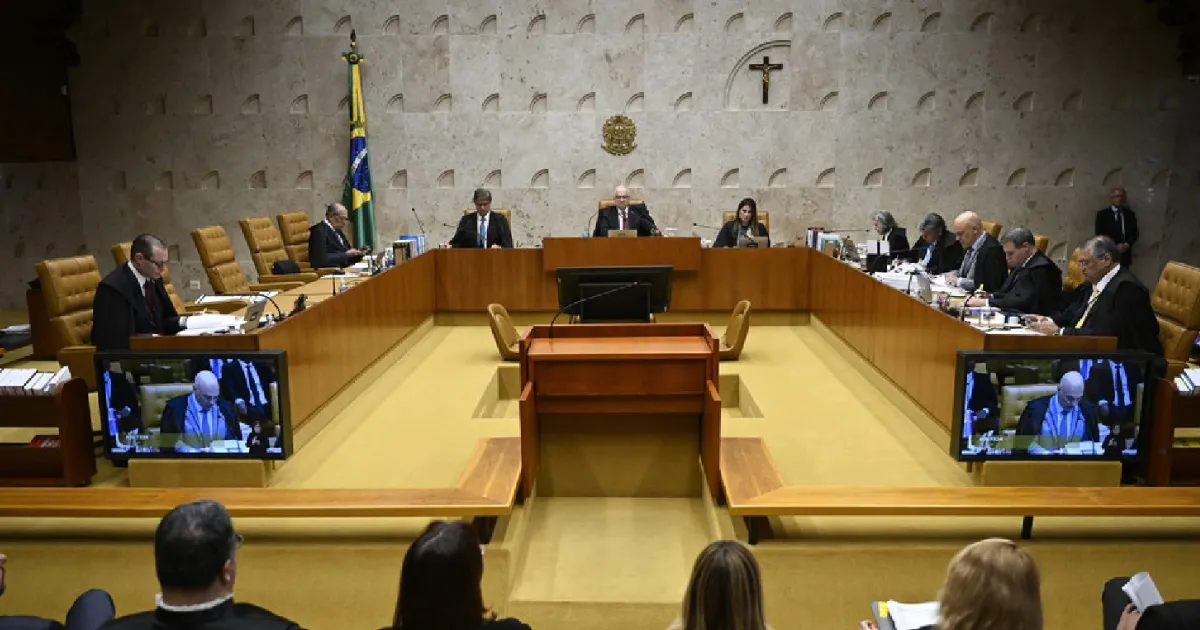
The joint committee tasked with reviewing Provisional Measure 1.394/2026 still appears as awaiting installation on the Federal Senate's website. As of November 4, no one held the committee's presidency, there were no meetings scheduled for the month, and its members had been appointed on September 30—more than a month ago. Thus, the regulation that shut down online betting operations in Brazil reaches its 41st day without Congress having begun to debate it.
On November 9, however, the clock stops being political and becomes constitutional. That day marks 45 days since the publication of the text, and the measure enters an urgency regime: it locks the legislative agenda of whichever chamber is processing it until a vote takes place. No one needs to decide for this to happen; it occurs automatically, and it is the first mechanism capable of forcing the movement that lawmakers' requests failed to achieve.
The subsequent deadlines are what define the scenario. The MP has an initial validity period of 60 days, expiring on November 23; the government can extend it for another 60 days, and since the parliamentary recess freezes the countdown, the deadline for Congress to decide can be pushed back to March 4, 2027. That is 101 days beyond the nominal expiration date, and that is where the real window for discussion lies.
In contrast to this inaction, there are 94 active amendments. By October 13, 99 proposed modifications had been submitted, five of which were later withdrawn. One group seeks to preserve sports betting and limit the ban to online casinos, while another focuses on the conditions applied to companies in the sector. The direction of all of them deviates from the objective with which the Executive signed the measure: completely removing the activity from the market.
The hypothesis of expiration has begun to circulate strongly in political discourse. O Globo reported that some senators interpret the failure to install the committee as an Executive strategy to push the resolution of the dispute to the Supremo Tribunal Federal, while publicly the Government maintains that the ban remains a priority. It is worth noting that this is a third-party interpretation and not an officially confirmed government position.
The leader of the Partido Liberal in the Senate was the one who put the contradiction into words. Carlos Portinho questioned the delay and suggested that the Executive might let the measure lapse once the election period is over. "A priority is not kept hidden in a drawer," he summarized, as quoted by the Brazilian media outlet, after pointing out that the joint committee had not even been installed. His assessment is that of an opposition member and does not amount to confirmation of the official strategy, but it describes a verifiable fact.
The complaint—and this speaks volumes about the situation—crosses party lines between the ruling coalition and the opposition. During the session on Wednesday, November 4, Senators Eduardo Braga and Cid Gomes, from the government's base, urged the President of Congress, Davi Alcolumbre, to expedite the committee's establishment so that the MP reaches debate within this legislative session. Opposition member Esperidião Amin joined the request. What troubles both sides is not the content of the ban, but the lack of resolution.
The delay also carries a compositional cost for the Government itself. If the review is pushed until the legislative turnover, the Executive would face a Congress with a stronger opposition presence and, consequently, less willingness to maintain the ban under the terms originally signed. The sheer volume and direction of the amendments already submitted demonstrate that the support to curtail—at least partially—the scope of the measure exists today, under the current balance of power.
In parallel runs the judicial front, and the two clocks are not synchronized. The Supremo Tribunal Federal is analyzing the constitutionality of the ban and, within that framework, held a public hearing convened by Justice Luiz Fux, bringing the Government, the industry, and other institutions to the table. A federal regional court has already reinstated an operator's license, citing legitimate expectation and the absence of any provision to refund paid fees, meaning the judicial route has begun to take effect before the legislative one.
For the affected companies, the practical reality is that none of this suspends the measure. The ban remains in effect and its restrictions apply, with Congress stalled and the Supreme Court yet to rule. The three possible outcomes—approval with amendments, expiration due to lapsed deadlines, or judicial nullification—create distinct legal scenarios for the licenses paid for under the previous regime, and none are ruled out for now.
November 9 will therefore be the next checkpoint. If the committee is installed in the following days, the MP enters the legislative track the Government claims to want. If it is not installed while the agenda is blocked, the argument that the Executive prefers a judicial resolution gains concrete weight.
A provisional measure is an executive order with the force of law issued by the President of Brazil on grounds of relevance and urgency, which Congress must convert into law within a constitutional timeframe to remain in effect. The joint committee is the body made up of deputies and senators that issues a preliminary report prior to floor debate in each chamber. Provisional Measure 1.394/2026, published on September 25, prohibited the operation, offering, and advertising of sports betting and online gaming within Brazilian territory.
Tags: Brasil, provisional measure, Congress, ban