Lula ratifies the veto that Congress and the STF must still resolve
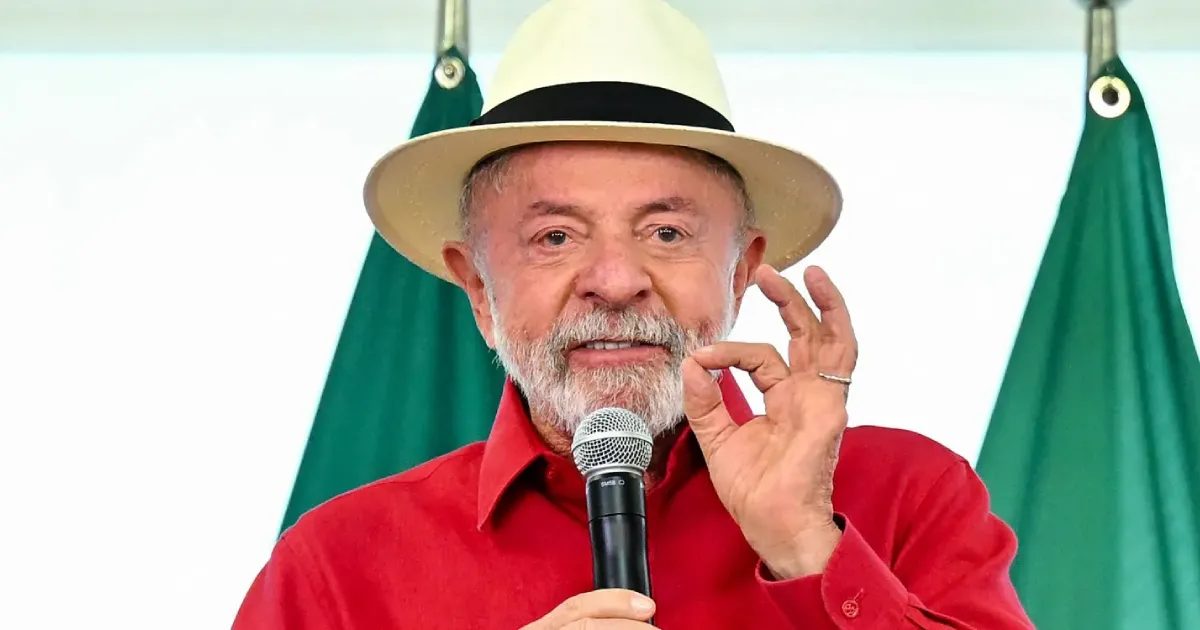
Between what a president declares irreversible and what actually is, in Brazil, lies a parliamentary process and a court case. On Thursday, October 22, during a YouTube livestream hosted by Federal Deputy André Janones, Luiz Inácio Lula da Silva insisted that betting platforms will not return to the country. It marked his first public appearance on the matter after setting it aside in the final stretch of the campaign, and came just three days before the runoff election.
The tone was harsher than in September. The president labeled the sector a "plague," recalled that he decided to intervene after speaking with indebted young people, and, addressing influencer Nath Finanças, delivered a line that summed up his stance: "Whoever wants to make money should work." What did not change with the speech, however, is the legal framework behind the decision.
The ban has been in effect since September 25 under a provisional measure—an executive order that carries the force of law upon publication, but expires if Congress fails to enact it. The review period lasts up to 120 days, and the joint committee tasked with evaluating it had still not been formed as the measure approached its first month in force. During the amendment window, which closed on October 13, lawmakers submitted 99 proposals: several aim to ease restrictions, while some suggest safeguarding sports betting while curbing online casino games, meaning the final text approved by Parliament could look very different from the original draft.
The second front lies in the Supremo Tribunal Federal, where Justice Luiz Fux serves as the reporting judge for three direct actions of unconstitutionality. Fux has indicated that he will address the petitions once the second round has concluded, while the Office of the Attorney General of the Union has already requested that the measure be upheld in a motion dated October 6. This timeline is far from neutral: by postponing the review until after Sunday, the court avoids ruling in the middle of the campaign and lets the election results come in first, meaning the legal battle will unfold against a political backdrop that has yet to be settled.
The third front is one the ruling party has no control over whatsoever. Flávio Bolsonaro, who faces Lula on Sunday, opened talks with football leadership to address the fallout from the ban. An investigation by Folha de S.Paulo revealed a phone call between the senator and Flamengo president Luiz Eduardo Baptista, known as Bap, dated one day after the official announcement. Three sources from the football world and the campaign team reported that the candidate stated that, if he wins, he will seek a solution for both clubs and sportsbooks, although he did not commit to reinstating authorizations. Throughout the campaign, he questioned the ban's impact on legal certainty, businesses, and teams, advocating that online casino and sports betting should be handled separately.
Flamengo is the prime example illustrating the cost of the dispute. The club joined the proceedings before the STF and emblazoned the slogan "Prohibiting is not protecting" across the front of its shirt, where main sponsor branding usually appears. That shirt front represents the most valuable commercial asset in Brazilian football, typically sold to a sponsor for the season, yet it is currently occupied by a political slogan rather than a brand. While there is no public figure on the lost revenue resulting from that move, the gesture puts a price tag on the conflict far more effectively than any press release.
There is also a coincidence of dates that converges everything onto the same day. The licenses granted to operators expire on October 25, the very day of the runoff. On Sunday, therefore, the Brazilian regulated market will officially be left without operating licenses just as votes are being counted to determine who will oversee the case, while Congress and the Supremo Tribunal Federal will still hold the final say over legislation that neither candidate can settle by decree.
Provisional Measure 1,394/2026 was published on September 25, 2026, shutting down the Brazilian regulated market for fixed-odds betting and online casino, which had been operating since 2025 under the supervision of the Secretariat of Prizes and Bets of the Ministry of Finance. A provisional measure takes effect immediately, but loses its validity if Congress does not approve it within the constitutional timeframe, and it can be amended during that process—meaning the ban's continuation hinges on a process the Executive started but cannot conclude on its own.
Tags: Brasil, Lula, STF, ban