Lula wants to vote on the veto before Congress changes
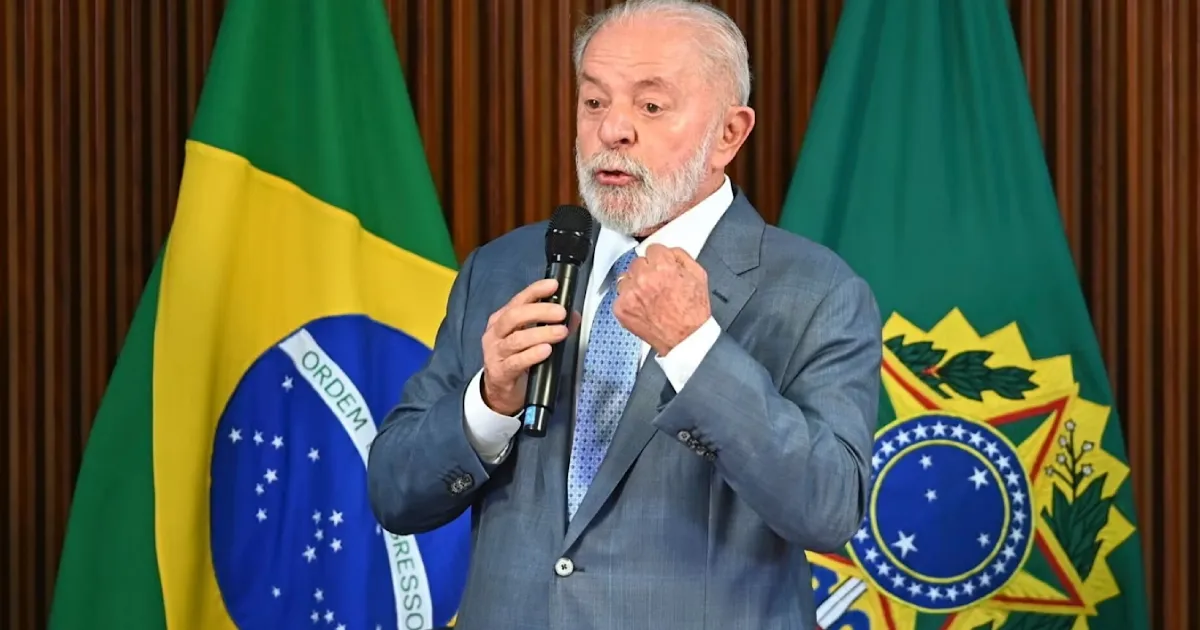
The Brazilian Government's rush to close the matter is driven by electoral arithmetic rather than legal grounds. The Executive branch led by Luiz Inácio Lula da Silva placed Provisional Measure 1.394/2026 among its priorities and wants the National Congress to decide its fate before the end of 2026, because starting in 2027, Parliament will have more opposition lawmakers and, by the ruling coalition's own assessment, passing Executive initiatives will become significantly harder.
Minister José Guimarães, of the Secretariat for Institutional Relations, placed the measure in the same package as the Zero Fare PEC and the Public Security PEC, the three issues the government identifies as central for the coming months, and set a specific date: joint committees have until December 20 to be established if the matters are to be brought to the floor. By voting on "these three major items," he stated at a press conference, the government would consider itself satisfied.
That deadline leaves a narrower margin than it appears. Between September 25, when the measure was published, and December 20, there are 86 days, yet the joint committee has not even met, let alone appointed a chair or rapporteur, even though its membership was finalized in late September. The government is giving itself less than two months to set up and operate a body that failed to get underway during its first month, self-imposing a deadline 75 days ahead of the measure's estimated expiration date, which, factoring in the parliamentary recess suspension, falls around March 5, 2027. In other words, the urgency stems not from the measure's expiration, but from the incoming legislative changeover.
The legal front already has a date and now also has an attendee list. Luiz Fux scheduled a public hearing for Tuesday, November 3, at 10:00 a.m., to be held in the courtroom of the Second Panel of the Supremo Tribunal Federal, at the request of the Office of the Attorney General of the Union and the Associação Nacional de Jogos e Loterias, with 26 institutions and entities summoned. The list includes the Brazilian Association of Economic Freedom, the Economic Regulation Laboratory of the State University of Rio de Janeiro, the Brazilian Institute of Responsible Gaming, the Brazilian Association of Radio and Television Stations, the Brazilian Football Confederation, the National Confederation of Industry, and the Ministry of Finance.
The composition of that list reveals who the court believes has skin in the game. Ten Serie A clubs were summoned: Portuguesa, Guarani, Vitória, Ponte Preta, Corinthians, São Paulo, Cruzeiro, Botafogo, Fluminense, and Flamengo, which together with the CBF occupy eleven of the twenty-six available seats. Football thus accounts for 42 percent of the seats in a hearing on a betting market, illustrating far better than any statement where the damage the STF is set to assess lies. The hearing, it should be clarified, will not decide whether the measure is suspended, but rather structures how the arguments will be presented.
The figures behind football explain this presence. According to data provided by Sports Value, sportsbooks account for 34 out of every 100 pesos that clubs generate from marketing and serve as the main shirt sponsor for 14 of the 20 clubs in Serie A—representing 70 percent of the top tier. The most striking figure was provided by Amir Somoggi, the consultancy's founder: commercial revenue for the clubs surged by 95 percent over the 2023–2025 three-year period, and without the sector's contribution, that growth would have stalled at 25 percent. In other words, betting accounts for 70 of those 95 percentage points—nearly three-quarters of all commercial growth in Brazilian football over three years. The consultancy also estimates that these companies poured between R$500m and R$600m more into advertising than firms from other sectors.
The protest has already moved beyond the institutional arena. São Paulo took to the pitch against Vasco on October 17 wearing "To prohibit is not to protect" printed on their chests, and Flamengo repeated similar messages in several matches, including the derby against Fluminense. Its president, Luiz Eduardo Baptista, took the argument to payrolls with a direct warning: under this measure, he said, the club will not have "the money to pay Lucas Paquetá's salary in January." Ten clubs and the CBF will use the hearing to demand an extended transition period for their sponsorship agreements should the measure remain in force.
What industry associations plan to argue is far more ambitious than a simple deadline extension. They contend that the illegal market grew "exponentially and improperly" as a result of the ban, and they are calling for the measure to be suspended while Congress deliberates or until the Supreme Court issues a final ruling. They also demand that existing permissions remain intact: authorizations, regulatory acts, and the official registry of licensed operators. It is a demand for a return to the status quo ante while discussions continue, rather than negotiating an exit.
The outcome over the next two months hinges on a race between two branches of government with differing incentives. The Executive wants a vote before the legislative turnover; the Supreme Court will hear arguments on November 3 and could rule on an injunction thereafter; and Congress has around a hundred pending amendments ranging from narrowing the scope of the ban to certain verticals to shielding existing sponsorship deals and establishing transition periods. Provisional Measure 1.394/2026, published on September 25, 2026, shut down authorizations in the regulated Brazilian fixed-odds betting and online casino market that had been operating since 2025 under the Secretariat of Prizes and Bets of the Ministry of Finance, and requires legislative conversion to become permanent.
Tags: Brasil, provisional measure, STF, football