Chilean Senate president proposes to eliminate online betting
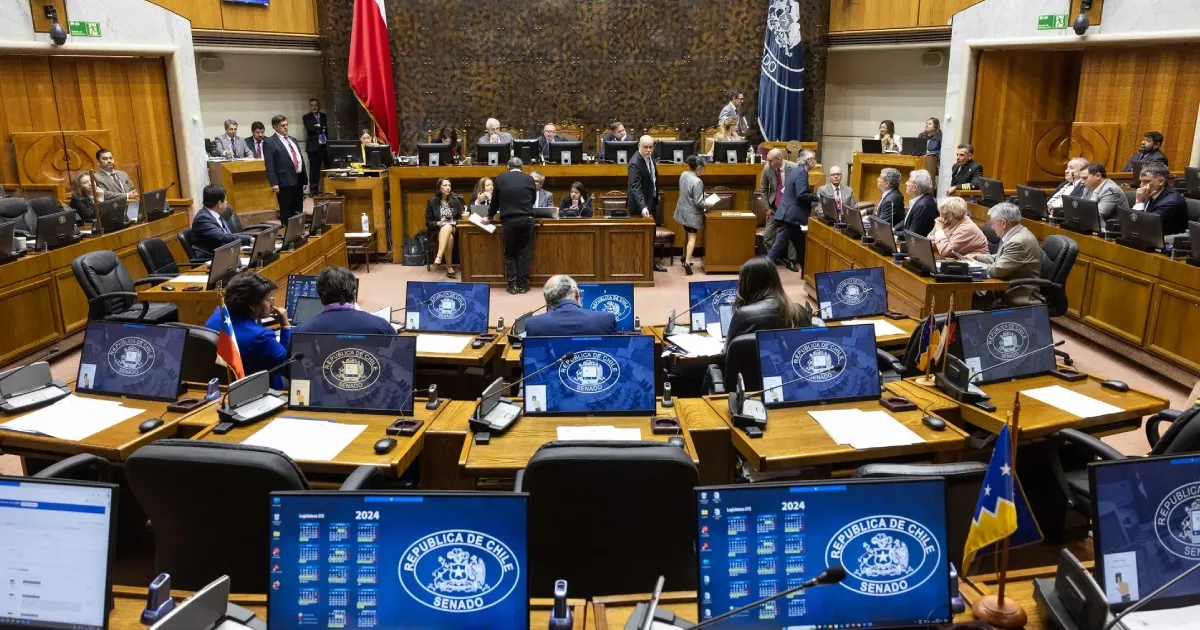
The Chilean government did not submit its proposals for the online betting bill, and the Senate extended the deadline until noon on Monday, October 26. During this gap, a proposal emerged that goes in the exact opposite direction: the President of the Upper House, Paulina Núñez, introduced an amendment aimed at eliminating online betting houses, with permanent judicial blocking of illegal platforms, penalties reaching up to 15 years in prison, and aggravating circumstances when criminal organizations are involved.
The Executive's delay has an internal explanation. The initiative is jointly owned by the Ministries of Health, Justice, Economy, and Finance, and the General Secretariat of the Presidency. According to circulating reports, the ministries sent already agreed-upon drafts at the request of Segpres, which then modified the text, leading to the rejection of the other four and hindering the formal submission.
From Segpres, headed by José García Ruminot, they denied this reconstruction with a process-based argument: it is a long-standing project whose progress requires reviewing various matters and building broad agreements. Vice President Claudio Alvarado emphasized the same point, speaking of successive meetings and a search for consensus on the amendments, and justified the extension with a short phrase: it has been deemed necessary to have an additional period.
Núñez's amendment does not discuss the details of the regime but its very existence. Online betting houses are not an innocent business, the senator affirmed, and listed what she believes they produce: addiction, debt, and serious consequences within families. She also criticized the fiscal framework of the official bill, with an idea that summarizes the prohibitionist stance: the State cannot become a tax partner in a problem it has a duty to prevent, and she raised the risk of illegal platforms ending up in the hands of organized crime.
The original bill points in another direction: protecting children and adolescents, establishing tax obligations, preventing problem gambling, protecting players, prosecuting illegal operations, and creating a regulatory framework for platforms. With the extended deadline and the prohibition amendment on the table, the discussion returns to square one: a model with licenses and controls versus the outright elimination of the activity.
What is striking about the current situation in Chile is that the two ends of the problem are progressing separately. While Congress does not define the regime, the State is already acting through judicial means, with the Superintendency of Gaming Casinos this week defending DNS blocks against platforms operating without authorization before the courts, and two of them appealing to the Supreme Court. In other words, there is enforcement without a statute, and this explains both the strength of the prohibitionist argument and its limit, because the same blocking that is being discussed in the courts today would be the central tool of Núñez's amendment, and it has been showing for weeks that platforms reappear with new domains. The comparison with the other case of the day is also valid: in the province of Buenos Aires, the lower house is drafting a comprehensive regulation text while a senator presents a bill to repeal the chapter that enables the activity, so the clash between regulating and prohibiting is not a Chilean peculiarity but the form the discussion is taking across the region after the Brazilian decision.
Tags: Chile, Paulina Núñez, online gambling regulation, betting ban